


Power Shift / ‘As a community, we have a right battle ahead’
This is an updated version of a feature originally prepared to set the scene for the national Power Shift project, a partnership of ten local news outlets investigating the green power boom. With 2025 coming to an end, it is worth once more to get a handle on the multitude of projects that are currently proposed for Shetland.

“So, you are planning to destroy our beautiful hills?”
YOU COULD hear the pain in the voice of one local crofter, confronting wind energy bosses who had just presented their case to construct up to 192 wind turbines in the centre of mainland Shetland.
The 50 or 60 people who attended the public meeting in the Vidin hall back in 2007 were left stunned by what was proposed.
This was to be the largest community owned wind farm in the world, would earn the council untold riches and would put Shetland at the forefront of the coming renewables revolution.
Thanks to the subsea cable that would connect the isles with the national grid for the first time, Shetland would finally be able to convert its “world class wind” into hard cash.
The promises made at the time were almost too good to be true and, as it turned out over the next 18 bitter and embattled years, very little of what was initially promised did materialise.



















Unsurprisingly, the magnitude of what was proposed quickly split local opinions.
Sustainable Shetland, a 1,000-member strong grassroots group, started to oppose the project, which at the time was a joint venture between utility SSE and the local authority.
“It opened the floodgates for many more large projects, and that is what is happening now, and it is for everyone to see.”
Frank Hay has been a member of the group from day one and has been its chairman and main spokesperson for the last seven or eight years.
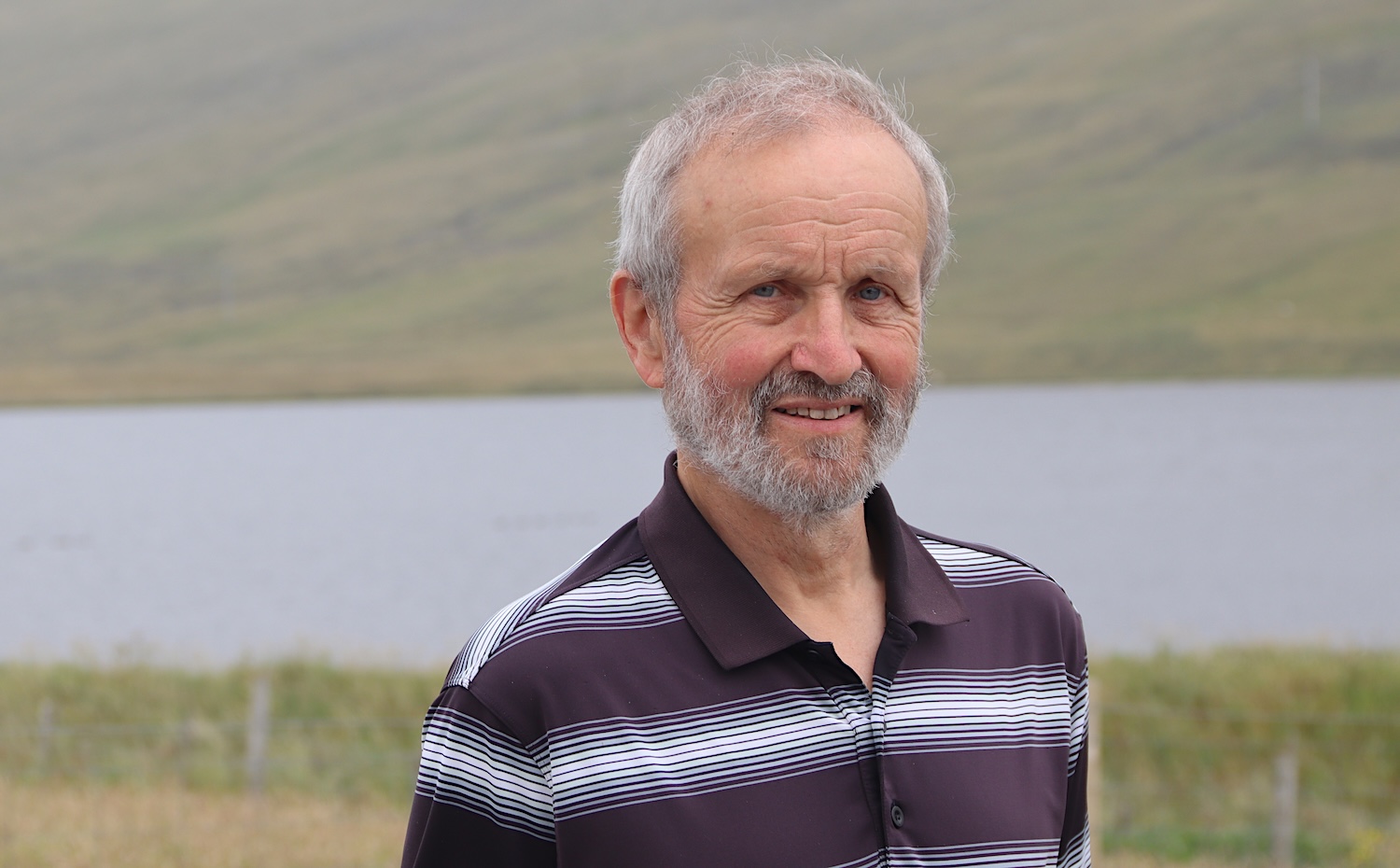
He lives in Weisdale, at the southern edge of the Viking wind farm. When he steps out his front door in the morning, he can see whether the turbines are turning. Most of the time they stand idle.
Become a member of Shetland News
It’s what gives the wind industry a bad name, and not just in Shetland.
The project has been pushed through against the wishes of a large section of the community, and only after a lengthy legal battle.
There is an equally large section of the community that accuses Sustainable Shetland of being responsible for squandering the community’s 45 per cent stake in the venture.
To find out the truth one would need to have full access to all the reports, legal advice and e-mail communication relevant to Shetland Charitable Trust’s decision not to invest in the wind farm.
But the trust, as the body that holds large parts of Shetland’s community funds, does not fall under Freedom of Information (FOI) legislation.
That is however something that might well change should the Freedom of Information Reform (Scotland) Bill, introduced to parliament in summer this year, ever become law.
The 103-turbine Viking Wind farm officially started producing energy in August 2024, but the electricity rarely finds a market while owner SSE Renewables cashes in on constraint payments.
“Viking is a prime example of how things have not been thought through properly,” Hay says, “the wind farm is connected to the mainland, but there is no grid to send it further south.
Further reading:
“All this was known and was pointed out in consultations, but any suggestions from lay people, as we are described, don’t count.
“Any kind of common sense suggestions are simply ignored by the developers.” No wonder people are disillusioned and increasingly angry at an energy transition that delivers massive profits for multinationals while leaving local people with some of the highest energy prices in the world.
It’s fertile ground for populists advocating simple solutions to very complex challenges.
“People have been trying to influence the debate here for 20 years, and hardly any of our politicians have paid much heed to or supported Sustainable Shetland,” Hays says. “Until recently none have openly questioned developments in Shetland.”
The retired teacher spends a large chunk of his time working his way through environmental impact assessments, scoping reports, planning applications while also responding to countless statutory consultations by regulator Ofgem, infrastructure operator SSEN, various developers and the two governments in London and Edinburgh.
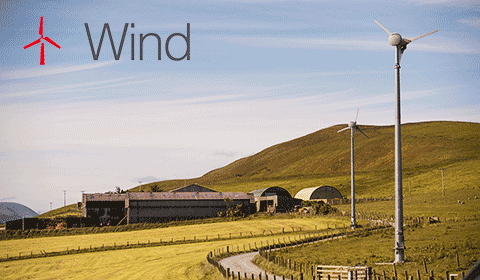
And there is plenty to keep up to date with as Shetland is to “play a major part in helping Great Britain achieve net zero targets” (SSEN Transmission brochure), as demonstrated in this long list of projects in the pipeline:
- Work on the eight turbine Statkraft-owned Mossy Hill wind farm, just outside Lerwick, could start next year and is expected to be operational by autumn 2028;
- Construction of two Statkraft-owned wind farm on the island of Yell (the 17-turbine Beaw Field and the 18-turbine Energy Isles wind farm) have been pushed back to 2029/30 after receiving a grid connection date of 2032;
- In November Statkraft confirmed plans for an 80MW green ammonia plant at Tagdale, near the Dales Voe base at the outskirts of Lerwick, which could be operational by 2029;
- The company has also plans for a 400MW hydrogen development at Scatsta which also has received a grid connection confirmation for 2032;
- Meanwhile, the two proposed offshore wind farms to the east of Shetland – ESB’s 500MW Stoura project and the much larger 2.3GW Arven now solely owned Ocean Winds are still in the scoping stage;
- Local joint venture Neshion Ltd has put forward plans for an eight-turbine wind farm plus 25MW battery energy storage system near the Toft ferry terminal in the vicinity of the Sullom Voe Terminal and the Shetland Gas Plant;
- Sullom Voe Terminal operator EnQuest meanwhile is working on plans to convert the large industrial site into a ‘net zero hub’ including carbon capture and storage as well as hydrogen and e-fuels production;
- The terminal is also in the process of being connected to the national grid for the first time (while its polluting gas power plant is due to be switched off), and has submitted a planning application for the two of seven planned large wind turbines;
- Edinburgh-based Wind2 is planning to erect three 150m high turbines at Girlsta, just south of the Viking wind farm, and has been told by planners that they are required to submit an environmental impact assessment (EIA);
- Finally there are plans to decarbonise offshore oil and gas production facilities, including the controversial Rosebank development which is being developed while required to go through the approval process again following a Supreme Court ruling.
Whether any of this will ever see the light of day is unknown and very much depends on the economics and technological maturity of individual projects. There are also some credible doubts about current timelines.
However, tasked by energy regular Ofgem, SSEN Transmission is planning to build the infrastructure to connect and integrate all these planned or proposed elements.
To facilitate a second, and at 1.8GW, much larger subsea cable, SSENT is planning to build a huge 400kV Northern Substation Hub somewhere between Scatsta and Toft.
And to link it all up with the existing Kergord substation, overhead power lines connected via pylons up to 38 metres high, will run through the north mainland via a second substation outside Voe, named Kergord 2.
Staff from SSENT put on a brave face when they were confronted by local people during one of their ‘consultations events’ in a packed Voe hall in late November.
There is anger and frustration in the community, particularly at the fact local people were last to learn about these plans and don’t really seem to count in the greater scheme of the energy transition context.
A petition calling on SSENT to bury the cable instead is gaining momentum, and the council has called on SSENT to undertake a cumulative impact assessment for its future infrastructure projects in the isles.
But the general feeling that all this is too little too late in a process that lacks accountability and transparency is widespread and overwhelming.
Local councillor Andrew Hall, who has been outspoken since day one by calling SSEN Transmission’s many events “propaganda shows”, is realistic about the stake the community has in what initially was called the ‘just transition’.
“SSEN Transmission’s knee jerk reaction to my request for a cumulative impact assessment (CIA) was an example of their dismissive behaviour when considering the concerns of the community,” he said.
“SSEN Transmission’s take on the matter may well be that numerous assessments will be undertaken as part of the overall planning process, and these will take into account the effects of their proposed developments.
“However, I believe it is perfectly reasonable to request a single CIA, which will document the overall and real impact of SSEN’s ‘Shetland Project’ on our environment, economy and community.”
He added: “SSEN Transmission do not appear to have a good track record when it comes to acting on the concerns of the community. Ultimately, their main concern is cost, along with their project deadlines.
“Consequently, being a realist, I acknowledge that we, as a community, have a right battle ahead of us to make any positive changes to SSEN Transmission’s project plans, but we must at least try!”
SSENT’s current consultation on some of its projects end on 8 January 2026. There links for feedback are here;
https://www.ssen-transmission.co.uk/northern-shetland-kergord
https://www.ssen-transmission.co.uk/projects/project-map/kergord-2-substation/
Become a member of Shetland News
Shetland News is asking its readers to consider paying for membership to get additional perks:
- Removal of third-party ads;
- Bookmark posts to read later;
- Exclusive curated weekly newsletter;
- Hide membership messages;
- Comments open for discussion.
If you appreciate what we do and feel strongly about impartial local journalism, then please become a member of Shetland News by either making a single payment, or setting up a monthly, quarterly or yearly subscription.