
News / Hopes that new ‘accelerator’ funding model could support inter-island connectivity aspirations
Elsewhere in the 2026/27 draft Scottish budget, new Northern Isles freight vessels are included – while there is positive funding news for NHS Shetland

FLAT fares for islanders on the Northern Isles ferry service may have grabbed the headlines locally, but what about some of the other elements of the newly announced draft Scottish budget?
Shetland Islands Council (SIC) has welcomed a proposed new “accelerator model” which promises to invest hundreds of millions of pounds in Scotland’s three island areas.
The government said this will fund “social and economic infrastructure” – with “fixed link enhancements” among the aims.
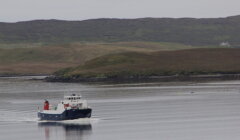
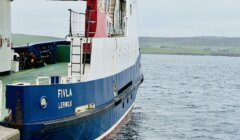
Meanwhile plans for two new freight ferries on the Northern Isles service – which would offer increased passenger capacity – appear to be included in a list of funded projects.
In September the project moved to the ‘invite to tender’ stage, with the overall cost estimated at £200 million.
There is also positive news for NHS Shetland, with its funding for 2026/27 set as £86.6 million – up from £74.8 million the previous year.
NHS Shetland chairman Gary Robinson said the health board now looks set to start the financial year in a “fully funded position” rather than face a deficit at year-end, which it has done for many years.
















“This is thanks to the efforts of the board, and in particular director of finance Colin Marsland and head of finance and procurement Karl Williamson’s efforts to quantify the true cost of delivering healthcare in Shetland,” he said.
In terms of Shetland Islands Council more details on its funding settlement are expected in due course.
Initial figures from the Scottish Government say the SIC stands to receive £127.3 million in 2026/27, which is up around seven per cent on the previous year.
The SIC says it has received confirmation that its request for an uplift for revenue support for inter-island ferries has been met.
There is also confirmation of a “commitment to capital funding, which enables our work on inter island connectivity to continue”, a spokesperson said.
Become a member of Shetland News
At first glance it appears there is £15.5 million in the budget for “inter-island connectivity” in Scotland – although the finer details are not yet clear.
For 2025/26 there was £20 million set aside for this purpose to be split equally between Shetland and Orkney, with proposals locally for the £10 million to go towards a new ferry to add resilience to the fleet.
Meanwhile an air departure tax is set to come into force in 2027, but the Scottish Government has proposed a Highlands and Islands exemption.
There is also a continuation of 100 per cent non-domestic rates relief for the next three years for retail, hospitality and leisure premises located on islands.
The Scottish budget sets out the government’s spending plans for 2026/27, but it still needs to be voted on for before it is set in stone.
As the SNP has a minority in the parliament, it needs the support of a small number of other MSPs – which resulted in other parties negotiating on items they would like to see in the budget prior to yesterday’s announcements.
But with Labour vowing not to oppose the budget, it stands to pass when it comes to a vote in late February.
Grabbing the headlines locally was the removal of peak fares for islanders – both in Shetland and Orkney – on the Northern Isles ferry service, which stands to come into force from April.
The cost of this in 2026/27 stands to be £1.8 million.
Peak ferry fares for islanders set to be scrapped by Scottish Government
SNP candidate for May’s Scottish parliament election in Shetland Hannah Mary Goodlad – who successfully got her party to approve a motion in the topic last year – said she had persuaded the government to remove peak fares.
The Scottish Greens soon after issued a press release saying its candidate Alex Armitage first raised the issue at Shetland’s external transport forum – in front of Transport Scotland and NorthLink officials – over a year ago.
Meanwhile the Scottish Liberal Democrats included the removal of peak fares in a list of things which are included in the budget “because we put pressure on the Scottish Government to include them”.
But SIC depute leader Gary Robinson said the removal of peak fares was raised a decade ago as a pledge of the Our Islands, Our Future campaign which sought greater powers for Scottish islands.
He said “CalMac services didn’t have that fare structure, and we argued that a lifeline service shouldn’t have this seasonal variation because it is a lifeline service in July just as much as it is in November”.
Regardless of who may take the credit, there is widespread approval of the change – with Shetland MSP Beatrice Wishart, of the Lib Dems, saying “seasonal fares never reflected the reality of everyday life” for islanders.
On a more strategic level, the inclusion of an “accelerator” funding model has been warmly welcomed.
Although Wishart said the “devil will be the detail”, SIC leader Emma Macdonald said it could support progress on the council’s inter-island connectivity project.
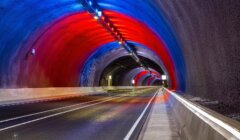
The council is currently assessing its inter-island transport network, including the prospect of some tunnels, with the piece of work set to result in business cases.
Macdonald said the accelerator funding model could “unlock massive multi-year investment in Shetland”.
“I have worked with the leaders of the other islands and the Scottish Government around finding a way to deliver the infrastructure investment that we need and this is the model that is being suggested,” she explained.
“There’s still details that need to be finalised around how this works in practice, but it is looking at being a mixed model funding package for social and economic infrastructure and will be aligned with the ambitions of the National Islands Plan.
“Officials are already having meetings to ensure we can get started on this straight away and there are plans to have a meeting with leaders and ministers again in the next few months.”
Independent councillor Macdonald – who is also standing for the Liberal Democrats in May’s Scottish parliament election – said she views this as a “real opportunity” for the SIC to be in a position to move forward to the next stage of the business case on inter-island connectivity when it is considered in the summer.
She said the SIC has “worked closely with the Scottish Government around that project”, adding that there is a need to not lose momentum.
“This funding will give us the confidence to be able to make more progress with the next stage and hopefully get us one step closer to tunnels being a reality,” Macdonald said.
She added: “Our communities are currently not seeing the benefits to match the costs of renewable energy development, and we are understandably wary about further exploitation.
“That is why the islands accelerator model is so important for Shetland, because it can finally give us rewards to match what we give to the rest of the country.”
Wishart said that “coupled with infrastructure development like tunnels” the funding model could help to tackle depopulation.
She said it is “welcome that Scottish Liberal Democrat calls for infrastructure investment have been heeded after the SNP abandoned their contentious islands bonds policy that they were committed to at the beginning of this parliament”.
Elsewhere in the budget, the government said the basic and intermediate rate thresholds for income tax will increase by 7.4 per cent to £16,537 and £29,526 respectively.
The government also points towards “significant extra funding” for universities and colleges, with colleges seeing a combined increase of £70 million in resource and capital funding.
It claims there will be “record funding” for police and fire services and an additional £10 million investment in community justice services, as well as a £20 million increase in the culture budget.
Against the backdrop of the Scotland football team competing the World Cup for the first time since 1998, the budget also includes mention of a “summer of sport” – free children’s sporting activities, including lessons on how to swim for every primary school child in the country.
The Scottish Budget will provide an additional £15 million in 2026-27 to expand breakfast club provision, while there will be additional funding to extend wraparound activity clubs in the afternoon and early evening.
Conservative Highlands and Islands MSP Jamie Halcro Johnston said, however, that it is a budget “which, coming after 19 years in power, proves this tired SNP government has run out of ideas”.
“The devil will, as always, be in the detail – but even at first glance, it is clear that the reality does not come close to matching the SNP’s rhetoric.”
Wishart said that the Lib Dems will “continue to engage with the Scottish Government in good faith to ensure this budget goes as far as possible in meeting the needs of islanders as well as people, businesses and communities across Scotland”.
Scottish finance secretary Shona Robison said the budget “delivers for families across the country, for a stronger NHS, and for a more prosperous future”.
Become a member of Shetland News
Shetland News is asking its readers to consider paying for membership to get additional perks:
- Removal of third-party ads;
- Bookmark posts to read later;
- Exclusive curated weekly newsletter;
- Hide membership messages;
- Comments open for discussion.
If you appreciate what we do and feel strongly about impartial local journalism, then please become a member of Shetland News by either making a single payment, or setting up a monthly, quarterly or yearly subscription.