

Energy / Could an offshore wind ‘test and demonstration’ project come to Shetland waters?
The Scottish Government has proposed introducing up to 1GW of offshore wind test projects to be split equally across Scottish waters, including in the Shetland region

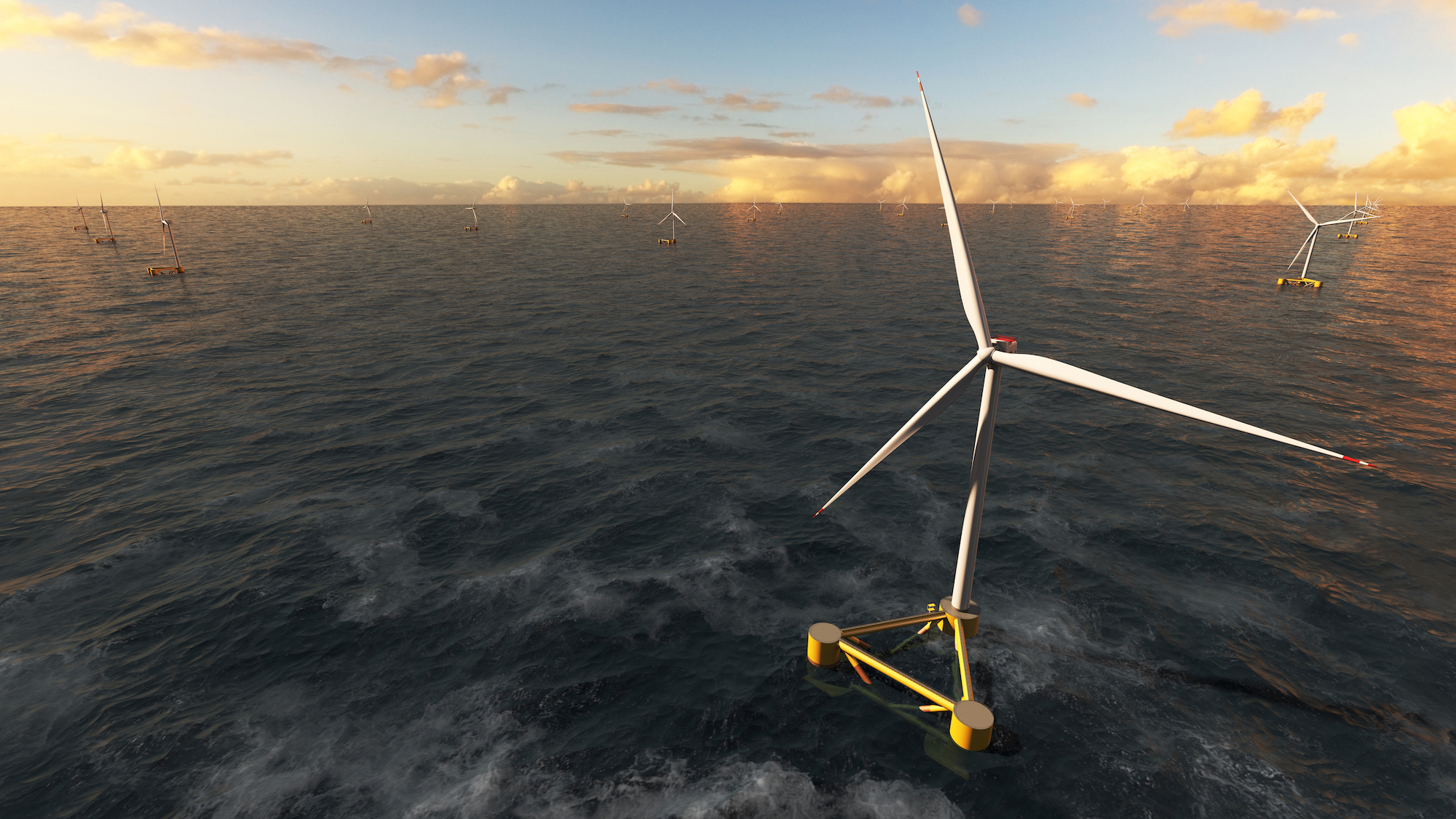
THE PROSPECT of more offshore wind development coming to Shetland waters – this time as a way of testing technology – has been floated.
A recent Scottish Government consultation on an updated marine plan for offshore wind energy included a proposal for additional ‘test and demonstration’ (T&D) development up to one gigawatt (GW) in capacity in seas around the country.
The proposal is for this 1GW to divided “equally” across five Scottish regions – one of which is Shetland.
Two offshore wind farms with a combined capacity of 2.8GW – Stoura and Arven – have already been proposed to the east of Shetland via the ScotWind leasing scheme.
These have drawn strong opposition from fishermen who feel they may be pushed out of some of their traditional fishing grounds.
The prospect of further offshore wind development, in the form of T&D projects, has also been met with a somewhat lukewarm response from some respondents to the consultation.




















The Scottish Fishermen’s Federation said it does not support the inclusion of a further 1GW of offshore capacity through T&D projects.
It said without sufficient mitigation, the T&D proposals would “exacerbate the spatial squeeze and threaten the viability of fishing communities and food security”.
Meanwhile Shetland Islands Council said the 1GW being split equally – with up to 200MW potentially being leased in the Shetland region – would be “disproportionate”.
It also questioned why T&D sites would stand to be located outside areas already mooted for offshore wind farms.
Earlier this year the Scottish Government consulted on an updated draft sectoral marine plan for offshore wind energy.
The government explained that the plan provides “spatial planning framework for the ScotWind and Innovation and Targeted Oil and Gas Decarbonisation (INTOG) leasing rounds, and considers the potential environmental, social and economic opportunities and constraints associated with offshore wind development across Scotland and its seas”.
Become a member of Shetland News
But one new feature of the updated plan is the proposal for 1GW of T&D projects in Scotland.
The SFF said this came as a “surprise”, giving it little opportunity to respond.
The Scottish Government said offshore wind technology “continues to develop at pace”.
“As such there is likely to be demand for access to seabed on which to test that technology – however it is currently unclear as to the scale, timing and location of such demand,” its plan said.
It explained that the inclusion of consideration for T&D helps in “future-proofing the draft updated plan in order to avoid further iterations”.
“It does not constitute a new seabed leasing round but recognises that there may be a need for additional testing for new and emerging technologies on an ad hoc basis to be considered by CES [Crown Estate Scotland] based on levels of demand,” the plan said.
It added that sites would likely be much smaller than already consented offshore wind projects – no larger than 100MW each.
The plan said potential rationales could include “research on components or whole turbine technology in an ‘at sea’ environment, testing of technology types, or certification of offshore wind infrastructure”.
It also said that T&D projects “will avoid co-locating with offshore infrastructure, key shipping routes and anchorage areas, and higher density fishing areas”.
The Scottish Fishermen’s Federation said that if the government decides to proceed with T&D sites, “fishing interests must be included fully in key decision-making processes”.
It called for “more meaningful involvement in marine spatial planning discussions related to the T&D sites selection”.
It also repeated views on issues such as compensation for fishermen, and its call for a moratorium on any offshore wind developments being consented.
The SFF also highlighted figures included in a socio-economic assessment attached to the draft plan, which said there could be a £70 million to £100 million gross value added impact to Scottish fisheries over the next five decades from offshore wind development.
For Shetland, this could be £24 million to £35 million – potentially leading to some job losses.
However, the report does highlight economic benefits from the offshore wind sector.
The Shetland Fishermen’s Association (SFA) meanwhile echoed the SFF’s points in its own consultation response.
It added that it is “time for the experiment to stop in our marine environment before it is too late”.
Shetland Islands Council’s response to the consultation saw the local authority seek clarity on a number of points regarding T&D projects in local waters.
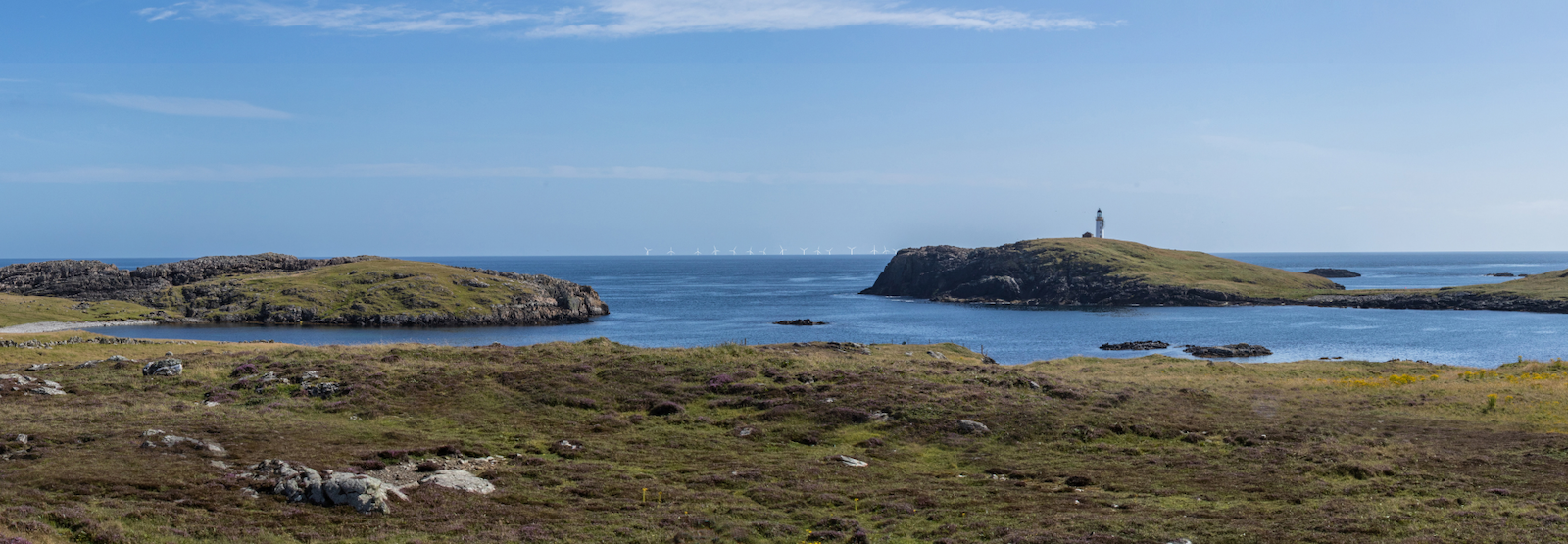
It noted how the Shetland region has 2.8GW of offshore wind capacity on the horizon through Arven and Stoura, but this is only 7.25 per cent of the total planned for Scotland.
“A 7.25% share of the 1GW T&D capacity would result in Shetland having to accommodate 72.5MW of capacity rather than 200MW,” the consultation response said.
“This is the equivalent of approximately four or five current offshore wind turbines and we feel this would represent a fairer and proportionate total to have in our region.
“Having to take 200MW of T&D projects in our region is unreasonable and unjustified and would result in placing significant pressure on our marine waters which are already subject to a significant amount of activity and development, as well as marine protected areas/environmental designations.”
The SIC’s view is that any T&D sites should be contained within the areas for Stoura and Arven as they have already been under social, economic and environmental assessment.
The plan also works on the assumption that any T&D sites are more likely to be located “inshore” as opposed to “offshore”.
The SIC warned this could have significant conflicts, including with fishing, aquaculture, shipping and subsea cabling.
“It is also likely to generate greater public and community opposition to further offshore wind development,” it added.
Orkney Islands Council said it supported the wider T&D proposal – particularly as the European Marine Energy Centre (EMEC) has been investigating and examining options for a national floating wind test centre located to the west of Orkney.
The RSPB meanwhile said it supported the T&D idea as these projects could play a “valuable role in creating innovative solutions that support nature-positive offshore wind development”.
Responding to the consultation, the Shetland Marine Planning Partnership – which brings together the UHI and the SIC – also took aim at some of the assessments included in the draft plan.
It said, for example, that a social and economic impact assessment contained “numerous” factual errors.
A public engagement event meanwhile was held in Lerwick on 1 August, with 34 people dropping in and nine attending a presentation.
Among the feedback from this event was that 200MW of T&D projects is “too high” for the Shetland region, while there were concerns regarding environmental impacts, particularly to seabirds and marine mammals.
There were also concerns regarding loss of access to productive fishing grounds, and the regarding unknown impacts of development of mackerel and herring migratory routes.
Analysing the consultation feedback, the Scottish Government said 211 responses were received to a question about whether up to 1GW of T&D projects should be included within the scope of the plan.
A total of 97 respondents said no, 53 said yes and 62 said ‘don’t know’.
Regarding the next steps, the government said the draft updated plan will be revised to take account of formal consultation responses and any additional supporting information that may be available.
“In the event that major changes are required to the draft updated plan as a result of the consultation, further assessment and/or consultation may be required,” it added.
The updated final plan will then be prepared and presented for approval and adoption by Scottish ministers.
Become a member of Shetland News
Shetland News is asking its readers to consider paying for membership to get additional perks:
- Removal of third-party ads;
- Bookmark posts to read later;
- Exclusive curated weekly newsletter;
- Hide membership messages;
- Comments open for discussion.
If you appreciate what we do and feel strongly about impartial local journalism, then please become a member of Shetland News by either making a single payment, or setting up a monthly, quarterly or yearly subscription.