Fish studies seek funding

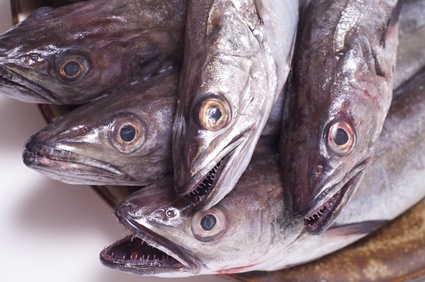
A CRUCIAL study into North Sea fish stocks is seeking new funding to ensure its important research can continue.
For the last two years, scientists at the NAFC Marine Centre in Shetland and local fishing boats have been collecting data about commercially significant species such as ling, monkfish, lemon sole and hake in the northern North Sea.
The resulting figures have contributed to scientific advice on quotas after being handed to the International Council for the Exploration of the Sea.
The project involved researchers joining Shetland fishing boats to witness catching experience first hand, and fishermen returning fish that had been tagged to the NAFC.
Team leader Dr Paul Macdonald said that the study had already shown that current quota restrictions have resulted in large discards of some species, such as hake.
Macdonald is hoping further funding can be found to keep the research going after it was initially backed by the Scottish government and later by the European Fisheries Fund.
“An important consideration for any data collection is consistency,” he said.
“It is imperative to have an unbroken time series of data, collected in a consistent manner, in order evaluate trends in the fishery and biology of a given species.”
He said any significant break in the research could undermine its usefulness, making it important to continue from both a scientific and commercial perspective.
The project has the backing of Shetland Fishermen’s Association who encourage scientists and fishermen to work together “for mutual benefit”.
Executive officer Simon Collins said that when the discard ban comes fully into force next year and prohibits the dumping of species like plaice, cod and hake, issues with certain quotas could be exacerbated.
“Scientists have gained valuable knowledge about the biological health and distribution of these stocks,” Collins said.
“Our fishermen should also gain when this information is fed through into the quota-setting process. That is particularly important for a species like hake, whose population has exploded in the North Sea in recent times but for which our quotas have been very low.
Shetland News — free to read
Membership helps pay for journalism
If you value impartial local journalism, become a member of Shetland News and get:
- Only local ads.
- Members' weekly newsletter.
- Bookmark stories and join the comments.
“When you have a mixed fishery as we do in the waters around Shetland it is plain to see that a low quota for an abundant species like hake is exhausted very quickly.
“When the discard ban kicks in that situation could cause real and totally unnecessary problems for the fishing industry. The sooner the science catches up with what our members see on the fishing grounds day after day, the better.”
Shetland News — free to read
Membership helps pay for journalism
If you value impartial local journalism, become a member of Shetland News and get:
- Only local ads.
- Members' weekly newsletter.
- Bookmark stories and join the comments.
