Whimbrels doing well in Whalsay
Habitat management and lack of disturbance seen as key factors for breeding success

WHALSAY has celebrated a record number of whimbrels this summer – with 12 per cent of the UK population now residing on the island, writes Chloe Irvine.
The Bonnie Isle holds the largest concentration of whimbrels (also known locally as a peerie whaap or tang whaap) anywhere in Britain, after 44 breeding pairs were recorded.
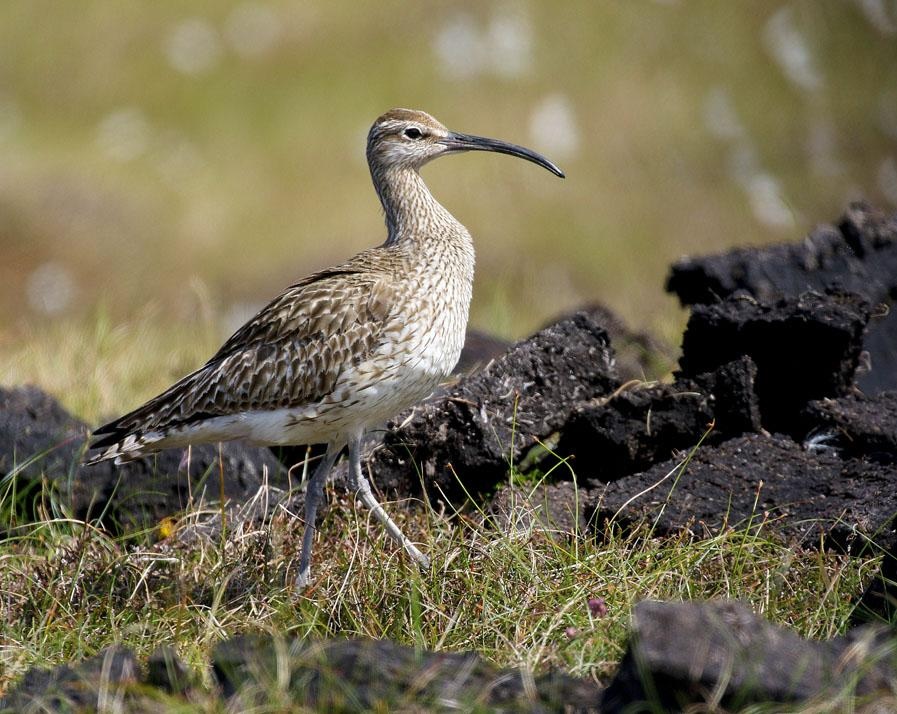
Whimbrels arrive in Shetland every year around late April and May after wintering in West Africa.
RSPB Shetland conservation officer Matt Willmott said the rise was striking, with last year’s survey counting just 32 pairs.
Occasional ringed whimbrels have been seen in Whalsay, including an individual trapped in Wales – this being a stop-off point when returning from its wintering grounds in West Africa.
Another bird ringed in Fetlar was found on Whalsay and was also photographed on its wintering grounds in Guinea Bissau – almost five thousand miles from the Bonnie Isle.

























While the reasons for their increase are not fully understood, he said Whalsay’s terrain offers ideal nesting conditions.
“The reason Whalsay seems to be so good is that it protects nesting habitat, particularly on the Isbister turn towards Skaw. Those hills are quite different to the other peatland in Shetland,” Willmott said.
“It’s more of an arctic tundra community of plants, and that’s what the whimbrels seem to be nesting in.”
The land in this area is also “quite dry” and dominated by racomitrium, commonly known as woolly hair moss.
“It’s a really light green colour and quite scratchy to the feel, but the whimbrels seem to really like that racomitrium-dominated heath,” Willmott said.
Sheep grazing is another factor in Whalsay’s whimbrel success.
Help keep Shetland’s news open to everyone

Good local journalism takes time, care and people on the ground. Membership helps us keep reporting the stories that matter to Shetland — and keep them free for everyone to read. Members get a weekly newsletter created especially for them, local ads only, and can bookmark stories and join the conversation in the comments.
“It’s important to have some grazing to stop it getting really tall and leggy. Whalsay is grazed by sheep, but it isn’t over-grazed, and that’s really important.
“The very extensive management is one of the key factors there.”
A lack of disturbance is also crucial, with whimbrels being “very prone” to being spooked.
Although Willmott and Whalsay birdwatcher John Lowrie Irvine counted 44 breeding pairs, he believes the true number could be higher.
Across the rest of Shetland, whimbrels tend to be more “thinly spread”, though Crussa Field in Unst remains another key site, holding around 11 pairs this year.
This week, a flock of around 50 whimbrels was seen heading south from Whalsay. While most birds have now left the isles, a few remain.
Willmott encouraged folk to listen out for their distinctive call.
“It’s worth listening out for them,” he said. “Their call has seven notes in a high-pitched whistle, and they often call as they fly over, so people will easily pick them out – it’s quite distinctive.”
Keep Shetland’s news open to everyone
Your membership helps us report the stories that matter to Shetland — and keep them free for everyone to read.