

Council / Concern raised that council tax is a ‘blunt tool’
Elected members spent two hours discussing principles of a longer-term approach to setting council tax

SOME of Shetland’s elected members have agreed that council tax is a “blunt tool” for income generation which should have been reformed years ago.
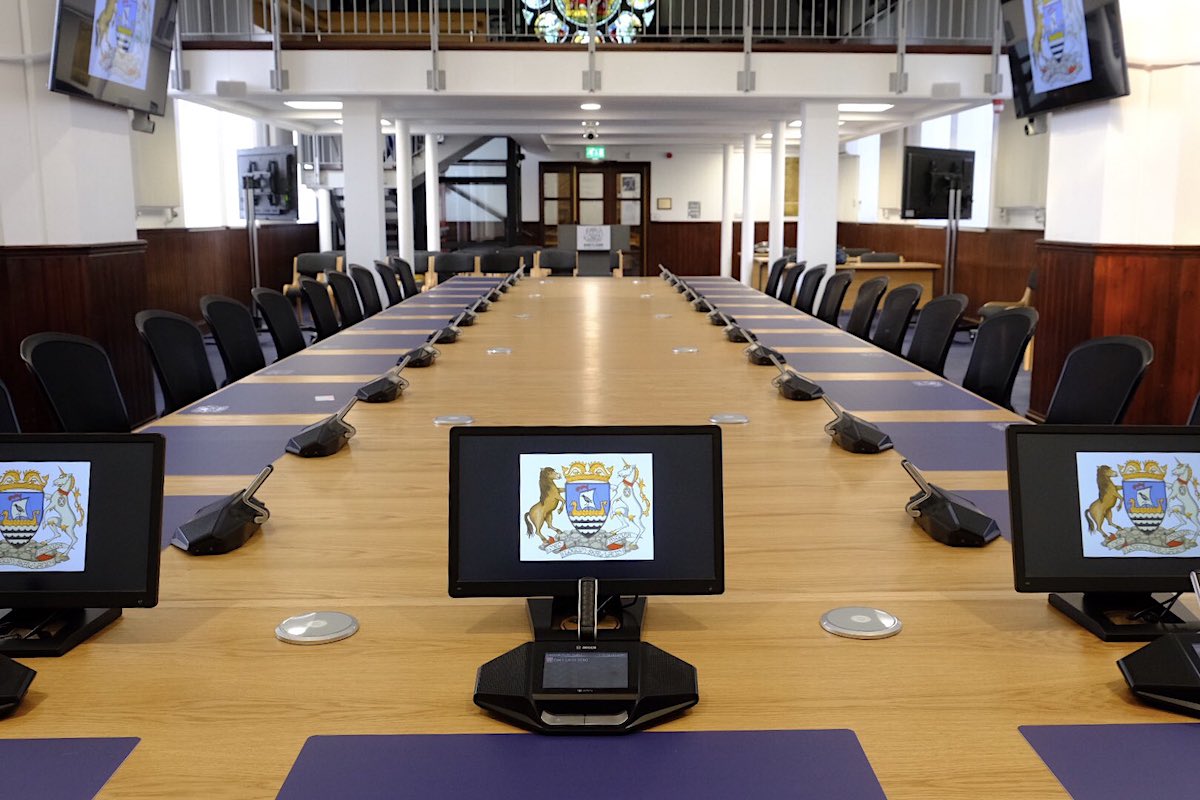
The topic came up for discussion at a meeting of the full Shetland Islands Council (SIC) on Thursday, where elected members were presented with a report on a longer-term, strategic approach to setting council tax.
No decisions on setting the rate for 2026/27 were made at Thursday’s meeting, however, with that still to come in the weeks ahead.
But while principles recommended by finance manager Paul Fraser include annual increases, SIC convener Andrea Manson reminded councillors that it will remain within their gift to set the rate as they wish, whether that be a freeze or an increase.
After two hours of discussion and debate in the chamber on Thursday, including a vote, the approach contained in the council tax strategy documents will be incorporated into the SIC’s medium term financial plan.















This includes a recommendation from Fraser for a “default ‘base’ calculation” in future which is an increase by CPI – or consumer price index – plus 1.5 per cent.
There was also a recommendation for an additional two per cent be added on top of this to assist the SIC – which has one of the lowest rates in the country – to move towards the Scottish average.
However a mention of this gradual move towards the Scottish average in the meeting’s list of decisions was diluted somewhat amid concern from councillors that it would ultimately not be successful or be the wrong target to aim for, with wording changed to make it more general.
Green member Alex Armitage, who spoke of the impact council tax rises can have on the vulnerable, sought to push through a more stripped back set of decisions to create greater “flexibility” in rate setting in future, but he was outvoted against a motion from Gary Robinson.
Become a member of Shetland News
Robinson, who moved that the recommendations be approved, said there was nothing in his motion that stopped the SIC from being “nimble” and added that it would help to give officers a “steer” for future council tax reports.
Robinson’s motion won 15 votes to two.
Council tax is a form of taxation on domestic properties to help pay for local services, and in Scotland local authorities can set its rate.
Council tax currently brings in £12.6 million a year to the SIC, but there still remains a large deficit at play – with more than £43 million needed in 2025/26 to balance the council’s budget.
Council tax for the current financial year saw an increase of ten per cent after a push from depute leader Robinson, who said it could be a start towards the SIC getting back to a more sustainable position.
That came after a council tax freeze in 2024/25, which was incentivised by the Scottish Government.
Council tax rates in Shetland are also among the lowest in Scotland, with band D sitting at £1,387 compared to a national average of £1,543.
During Thursday’s discussion there was repeated frustration over the council tax system in Scotland, Armitage saying it is “too blunt an instrument” and no longer fit for purpose in an “age of inequality”.
It is also based on property valuations from back in 1991.
“We need council tax reform,” Armitage said. “The Scottish Government has the power to reform council tax and we have a voice in the Scottish Government.
“I think we should be using that voice loudly to shout for council tax reform, so that it can truly be a tool to challenge inequality and challenge the cost of living.”
Armitage also said he wished to ensure that councillors were able to freeze the rate for 2026/27 when the time came – with Manson stating that is within the gift of councillors regardless of the decision at the meeting.
Meanwhile Robinson said it was nearly 20 years since the SNP announced that council tax was “unfair” and needed to be changed.
“Yet here we are […] and still no change on council tax,” he said.
But Robinson said it is “unfortunately the tax that we’ve got”, and that the SIC needs to use the tools it has at its disposal.
He said his key focus was to close the gap between what the SIC spends, and what it can afford to spend.
Robinson said the SIC has done itself “no favours” by being at the bottom of the range of council tax rates in Scotland, and said that freezing the rate in the past has created difficulty when the SIC has entered into talks with the government about seeking other funding.
Robinson said the approach contained in the strategy discussion paper should ensure that the SIC does not fall “further behind”.
“We need to consider every opportunity to try to put the council back on its sustainable footing,” he said.
The depute leader also highlighted that income to the SIC would be used in many ways to support the most vulnerable in society.
There are also council tax reductions, discounts and exemptions in place for certain people.
SIC leader Emma Macdonald said all councillors “care about our community” and recognise the cost of living challenge. She also said the SIC has to recognise that council tax increases can prove a challenge for people, including folk in employment who do not qualify for an exemption.
“But the reality is the cost of delivering our services here is also much higher,” Macdonald said, adding that she is worried there will not be a proper reform on council tax.
Depute convener Bryan Peterson also said that council tax is a “blunt tool – but it’s the only tool that we have” regardless of what figure is applied to it.
Lerwick North and Bressay member Stephen Leask also chimed in with the “blunt tool” remark, but also said that using its opportunity for extra income would help the SIC be perceived as more credible by auditors and the Scottish Government.
Meanwhile Shetland Central member Moraig Lyall said council tax only makes up 11 per cent of the SIC’s income and is just “tinkering at the edges” of the wider picture.
She said given the rising pressure on council services across the country targeting the Shetland rate to more towards the Scottish average could be unsuccessful.
Shetland Central member Ian Scott reminded his peers that the councillors voted in favour of his idea to freeze the rate, and housing rents too, four years ago – and claimed that the SIC’s reserves have remained “very healthy” since.
He said the SIC is now in the “rainy day” and highlighted the extra cost of living for people in Shetland.
Introducing the report, Fraser said the documents which went in front of councillors did not represent a council tax strategy itself.
But he said they should “sow the seeds” for a clearer, more sustainable and transparent approach to council tax, and provide a “starting point” for elected members when setting the 2026/27 rate.
Fraser clarified that the principles contained in the documents will be housed within the SIC’s medium term financial plan.
He also gave elected members an update on a recent public consultation the long-term approach to council tax in Shetland.
There were 330 responses in total, with some “highly polarised views” among the results.
One question saw people rank five long-term strategic options, with “no increase” the most popular first choice – but also the most commonly last-ranked option too.
But Fraser said one key message from the consultation was that communication and transparency around council tax could be strengthened.
Become a member of Shetland News
Shetland News is asking its readers to consider paying for membership to get additional perks:
- Removal of third-party ads;
- Bookmark posts to read later;
- Exclusive curated weekly newsletter;
- Hide membership messages;
- Comments open for discussion.
If you appreciate what we do and feel strongly about impartial local journalism, then please become a member of Shetland News by either making a single payment, or setting up a monthly, quarterly or yearly subscription.