
Politics / Housing, ASN provision and assisted dying debated at first political hustings
Ability Shetland and Shetland Community Connections host opening debate of campaign

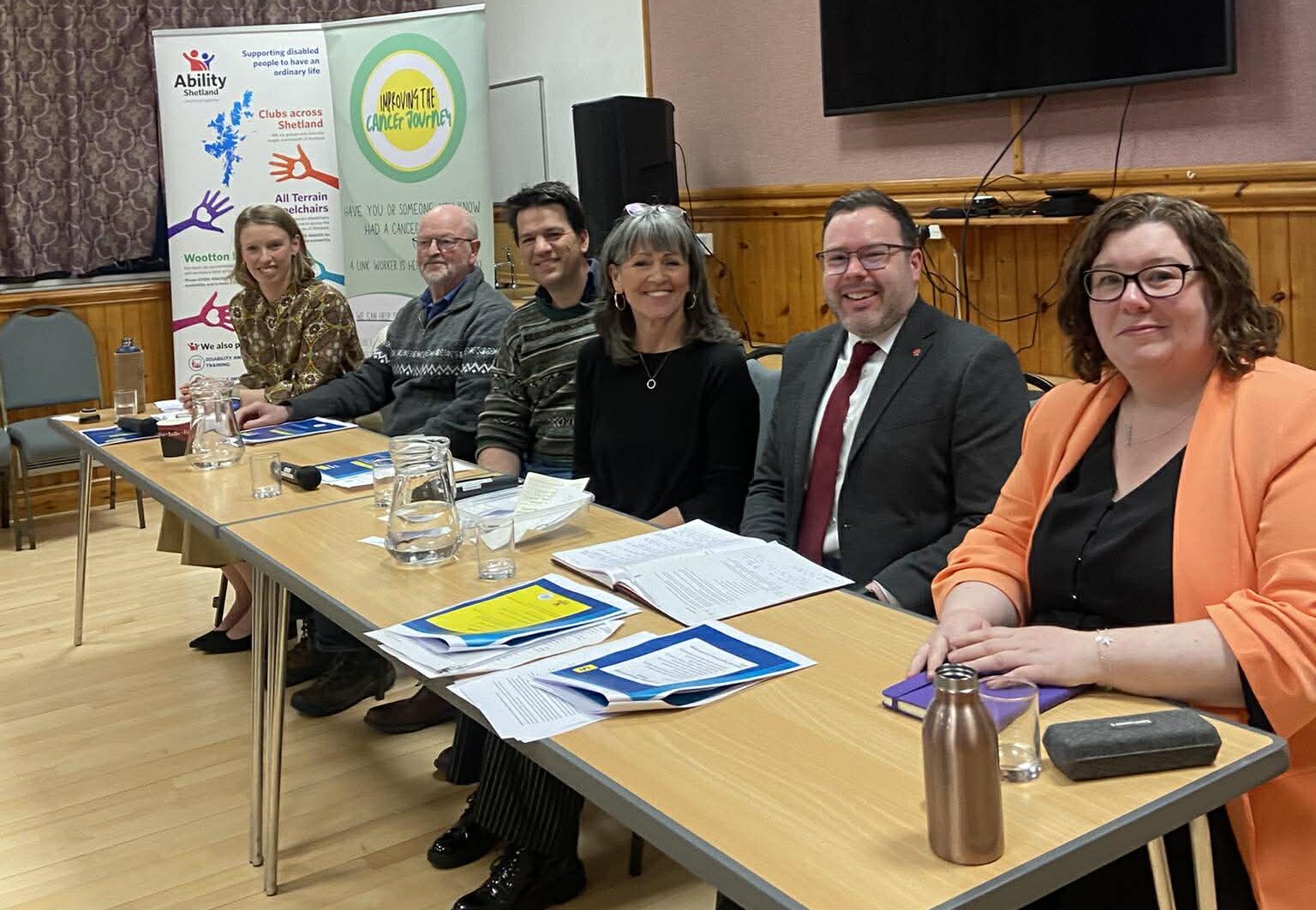
A FIERCE icy wind may have been blowing outside, but in Islesburgh’s room 12 the temperature could not have been higher.
That was an apt atmosphere for the first political hustings of the 2026 election campaign on Wednesday night, ushering in the start of a fraught race for votes leading up to 7 May’s decision day.
A hustings led by Ability Shetland and Shetland Community Connections, Wednesday’s event was a chance for disabled people and unpaid carers to put their concerns to the parliamentary hopefuls.
Despite the specific framing, candidates still found the opportunity for political side-swipes at their rivals and links to their own party’s perceived successes.
On more than one occasion, moderator Jane Moncrieff had to implore an election hopeful to actually answer the question she was putting to them.
Five of the six election candidates confirmed so far were in attendance on Wednesday, with only Reform UK’s Vic Currie – who did not respond to the invite – absent.























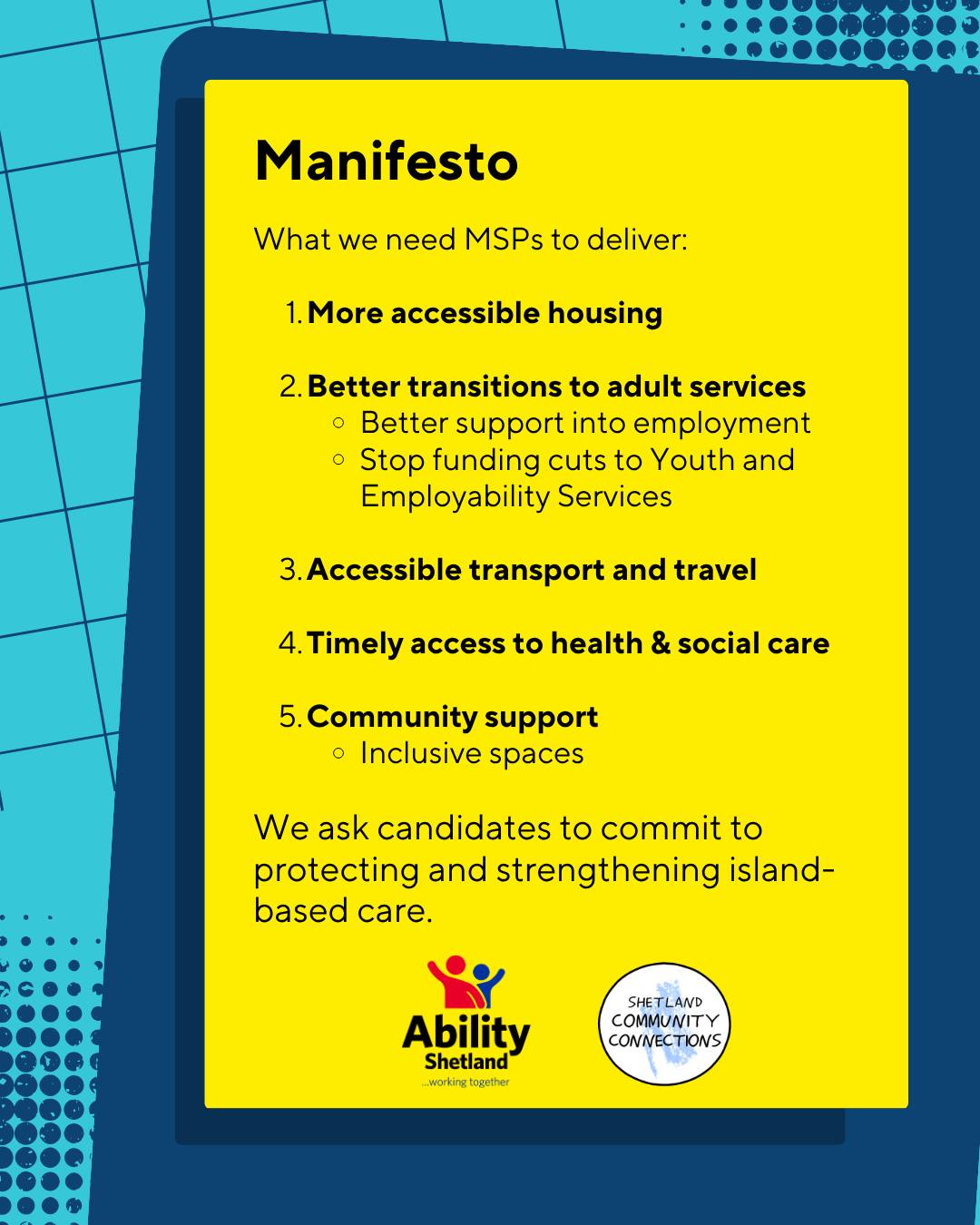
Ability Shetland and Shetland Community Connections presented a manifesto to the candidates, calling more “more accessible housing”, accessible transport, better transitions to adult services and timely access to health and social care.
Accessible housing provided the most contentious exchange of the night, with SNP’s Hannah Mary Goodlad taking aim at Shetland Islands Council’s record in delivering homes.
Directing her comments at councillors Alex Armitage (Greens) and Emma Macdonald (Liberal Democrats), Goodlad said the SIC’s Strategic Housing Investment Plan (SHIP) was “utterly confusing” and left her wondering what the objective was.
She directly asked the pair how many of the houses in the new Staneyhill development in Lerwick would be accessible.
Although the Staneyhill project is listed in the SHIP, it is a Hjaltland Housing Association development and not the council’s.
Become a member of Shetland News
Meanwhile Goodlad said that more than 400 homes were being left empty “on this council’s watch”, calling it “unacceptable”.
Armitage said that a number of those homes were in the rural, hardest to reach areas and were in a “poor state of repair”.
Finding contractors willing to carry out extensive renovations to the properties had proved difficult, he added.
Macdonald pointed out that she was sitting there as a Liberal Democrat candidate, not as the council’s political leader, as Goodlad alluded to.
She said she did not have the information to hand about how many of the Staneyhill homes would be accessible.
However she said Shetland needed to look beyond the next five years when tackling the housing crisis, urging a longer-term approach.
Goodlad responded by saying that the SNP was spending £56 million on housing for rural and island communities, adding she would look to ensure that was spent in Shetland if she was elected.
The candidates were also grilled on assisted dying, improving additional supports needs (ASN) provision in schools and tackling the price of Loganair flights.
There were barbs directed up and down the table about each party’s political records, with Macdonald claiming that the SNP had spent £30 million on National Care Service plans which had proved highly unpopular locally.
Labour’s John Erskine also took aim at the SNP, saying they had received the largest funding settlement ever from the Labour government but had “underspent year on year”.
“They’re not using the money effectively,” he added.
Goodlad defended their record, however, saying they were delivering £6 billion a year towards the Scottish social care system to protect the most vulnerable in society.
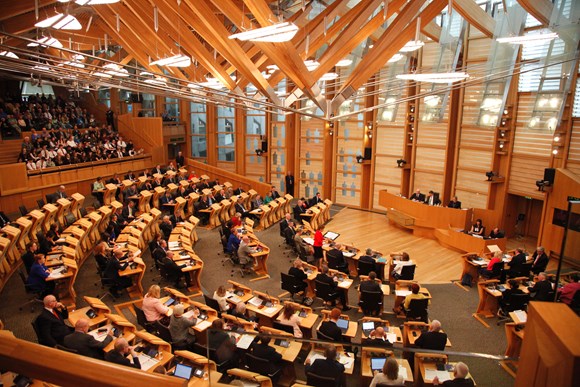
Quizzed on their views on assisted dying, following a bill which narrowly failed to pass in Holyrood earlier this month, three of the five said they would have voted in favour of it.
Armitage called it a “complex issue”. He said he had recently discussed it with elderly family members, who were thinking about whether it could be an option for them in future.
He said he felt the safeguards were already there in the recently dismissed bill, and that people should “respect someone’s bodily autonomy” to make the decision to end their life.
Brian Nugent of the Alliance to Liberate Scotland party – a name which he admitted was a “bit of a mouthful” – disagreed however.
He said he believed in the value of life, and that the introduction of assisted dying “would be the end of palliative care”.
Money spent on palliative care in Canada was taken “away from palliative care to put it towards killing people”, he claimed.
“Let’s look after people, let’s not put them to death.”
Goodlad and Macdonald were in favour, while Erskine – who said he did not feel the NHS was currently able to cope – would have voted against the bill.
They all agreed that the issue was “not going to go away”, and that there was the likelihood that whoever was elected would be asked to discuss it again in Holyrood.
Moncrieff read out a question claiming there had been a “complete failure” in ASN provision in Shetland, and asking the candidates how they would solve this.
Goodlad said the “right resources” needed to be in place to support the system, adding that needed to be fundamentally stepped up.
Nugent agreed that resources were the issue, pointing the blame at the Scottish Government, while Armitage said that some teachers already in place were doing an exemplary job.
“There are so many good examples in Shetland of teachers that really get it right for Shetland,” the paediatrician said.
Erskine said Labour wanted to create 300 specialist ASN jobs across Scotland, adding it was both a funding and staffing issue.
He said the number of ASN pupils was growing year on year, and that there needed to be more people in post to deal with that.
Macdonald said it was not just about funding – it was about the “flexibility” of that to ensure that ASN provision in Shetland could be best served.
She said the Scottish Government often gave money but provided a specific target for that grant, whereas she said it should be up to Shetland to decide where that money would have the greatest impact.
Become a member of Shetland News
Shetland News is asking its readers to consider paying for membership to get additional perks:
- Removal of third-party ads;
- Bookmark posts to read later;
- Exclusive curated weekly newsletter;
- Hide membership messages;
- Comments open for discussion.
If you appreciate what we do and feel strongly about impartial local journalism, then please become a member of Shetland News by either making a single payment, or setting up a monthly, quarterly or yearly subscription.