


Viewpoint / Grit and resolve needed to carry fishing industry through turbulent times
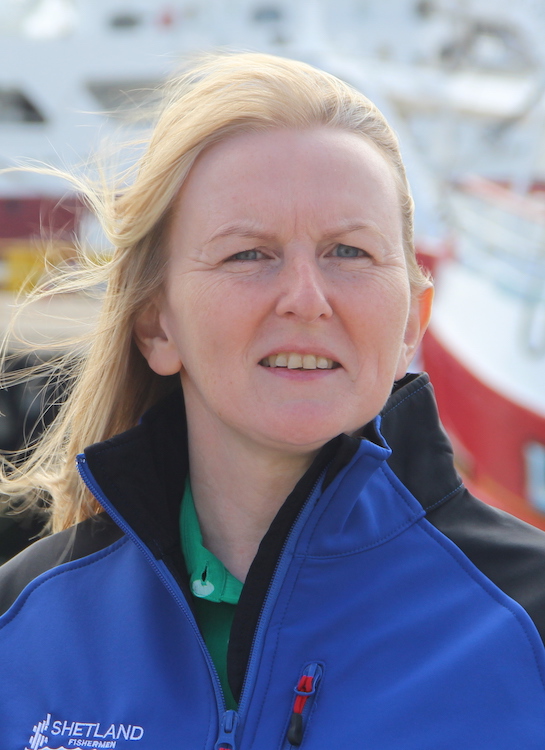
Shetland Fishermen’s Association’s Sheila Keith reflects on the last 12 months and says 2026 will be a ‘demanding year, but not an impossible one’

THE SCOPE and responsibilities of Shetland Fishermen’s Association (SFA) are expanding to mounting external pressures on the fishing industry, writes SFA executive officer Sheila Keith in an end of year message.
The stress is intensifying, and the challenges are becoming more acute. Following on from a difficult 2024, the last year has certainly been one which has called on the grit, resolve and determination of Shetland’s fishing community.
The year started under a dark shadow with the loss of Dr Ian Napier, a staunch and steadfast supporter of our industry and a voice of reason in fisheries science. His absence has been deeply felt, but his legacy continues to guide our work.
It would be remiss not also to mention the passing of another supporter of our fishing industry, Peter Jackson, an LHD director, then chairman, for almost 60 years. Our thoughts are still with both families.
But among the litany of challenges there is hope. The new Opportune arrived in June, and the Danish shipyard Karstensens A/S signed contracts to build replacements for the pelagic vessels Serene and Antares.



October marked a milestone that speaks volumes about the pride our fishermen take in caring for the seas with the 20th anniversary of Fishing for Litter.
And most heartening of all, our fleet continues to defy the odds.
Despite the pressures there’s a growing interest among young people in joining the industry, reflected in the latest cohort of school leavers stepping aboard our whitefish vessels. It’s a reminder that the spirit of Shetland’s fishing community remains strong and continues to be worth fighting for.
Beyond our shores, the renegotiated deal which gave EU boats access to the UK EEZ for over a decade was one that hit us hard, compounded by the Prime Minister’s insistence that it was a good outcome for the industry.
Become a member of Shetland News
The pain of that decision still leaves fishermen, and their representatives, feeling let down and angry.
The catch advice from ICES (International Council for the Exploration of the Sea) for 2026 was beyond challenging, especially for cod and mackerel.
We and others are frustrated at the way ICES has over-stretched its role in providing scientific advice to now influencing fisheries management, a role properly reserved for governments.
We continue to engage with government officials and organisations whose policies and proposals – ranging from offshore wind developments and installation of seabed infrastructure to marine protected areas and aquaculture projects – all have the potential to reduce access to fishing grounds.
With each new initiative, we strive to participate constructively in consultations and meetings, offering evidence-based input grounded in generations of experience.
Yet too often, our contributions are overlooked or dismissed without meaningful mitigation. This leaves us questioning the value of these processes when our voices, and the facts we present, seem to carry little weight. No wonder fishermen feel cancelled.






















Much of our work is pushing back on misleading narratives from external groups, often from the most unusual of places. Policymakers, environmental organisations and the media are all at it.
Each distorts the public’s perception and influences decisions that directly affect our members’ livelihoods and are almost impossible to counteract. It is more than ever essential to ensure we gather good science to present our case.
Amid the prevailing sense of uncertainty and challenge, it’s important to pause and remind ourselves of a few enduring truths that can and do lift our spirits and refocus our gaze toward a better horizon. Shetland fishermen are resilient. They possess generations of skill in catching and handling fish, and their reputation for quality remains respected by buyers near and far. These are not just comforting thoughts – they are facts we must hold onto.
We still have a fishing sector in Shetland. It’s under immense strain, often overlooked and pushed aside, yet it continues to stand firm. The pressure is relentless, and the need for relief isn’t just timely – it’s long overdue. It’s time for our efforts to bear fruit.
As we look ahead to 2026, there is no disguising the scale of the challenge before us. The year will demand the same grit and determination that have carried Shetland’s fishermen through the turbulence of recent times.
Difficult quota advice, political uncertainty and continued pressure on our fishing grounds will test us again. But if there is one thing our industry has proven time and again, it is that we do not shy away from hard years, we make them work. That resolve will be essential in the months ahead.
There are, however, reasons to hold onto hope. Fishermen are reporting encouraging signs of small fish on the grounds, a reminder that the sea’s ability to renew itself remains strong when managed responsibly.
Our fleet continues to land high quality catches that command prices above those of our competitors and demand for Shetland fish remains robust. These fundamentals matter. They show that despite the noise, despite the pressure, the core strengths of our industry endure.
Yet we cannot ignore the issues that require firm challenge. The proposed economic link for pelagic vessels is not welcomed by our pelagic fishermen, and rightly so.
It risks undermining the viability of a sector that has invested heavily, behaved responsibly, and contributed significantly to the Shetland and Scotland economy. This is a fight we must take forward with clarity and conviction.
Likewise, access to fishing grounds remains a red line. Whether the threat comes from offshore wind, cables, aquaculture expansion or shifting political priorities, we will continue to defend the space our fleet needs to operate safely and sustainably.
There are also opportunities on the horizon. In 2026, new apprenticeships for young entrants will begin, offering school leavers a structured pathway into a career at sea. and an investment in the next generation of Shetland fishermen. This will give a signal that our industry still has a future worth stepping into.
With Scottish elections approaching, we call on all candidates to recognise the importance of this industry to our islands and to commit to supporting it.
Fishermen do not ask for special treatment, only fairness, respect, and policies grounded in reality rather than ideology. The decisions made in the next parliamentary term will shape the future of our fleet for decades. We need representatives who understand that and who are prepared to stand with us.
The responsibilities of the Shetland Fishermen’s Association continue to grow as external pressures mount, but so too does our determination.
We enter 2026 with a strong team and strong resolve. It will be a demanding year, but not an impossible one. With unity, resilience, and a willingness to challenge what must be challenged, we can ensure that Shetland’s fishing industry not only survives but continues to thrive.
The sea has sustained our community for generations. With the right support and the right decisions, it will continue to do so for generations to come.
Become a member of Shetland News
Shetland News is asking its readers to consider paying for membership to get additional perks:
- Removal of third-party ads;
- Bookmark posts to read later;
- Exclusive curated weekly newsletter;
- Hide membership messages;
- Comments open for discussion.
If you appreciate what we do and feel strongly about impartial local journalism, then please become a member of Shetland News by either making a single payment, or setting up a monthly, quarterly or yearly subscription.