

Politics / ‘It is the can-do attitude of our neighbours that is inspiring and motivating’ – Goodlad
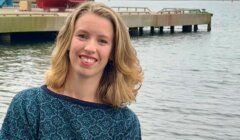
SNP candidate Hannah Mary Goodlad answers questions from Shetland News following her recent visit to Faroes

CANVASSING for votes has started surprisingly early locally with the Holyrood election still more than five months away.
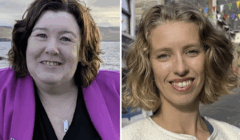
So far three candidates – John Erskine for Labour, Hannah Mary Goodlad for the SNP and Emma Macdonald for the Lib Dems – have declared and there is speculation that more might join the fray soon.
Looking to Shetland’s Nordic neighbours for inspiration and understanding is very much part of SNP candidate Goodlad’s campaign to become the islands’ next MSP.



















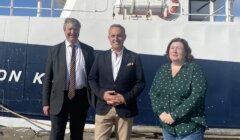
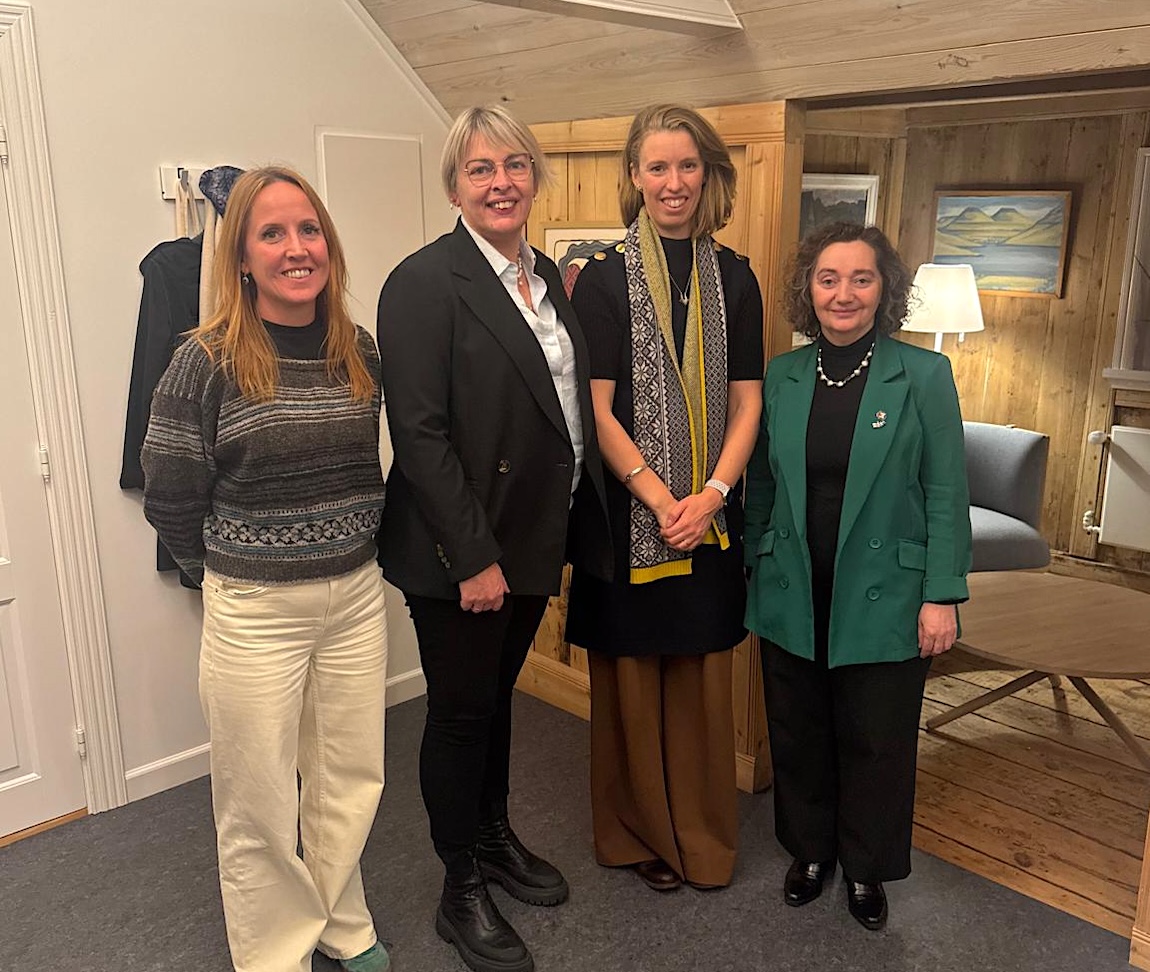
Goodlad, who took a year out from her job with Norwegian energy company Equinor to focus on the election campaign, has just been to Faroe to learn more about local decision making.
On her return she set some time aside to answer questions by Shetland News.
What was the purpose of your visit to the Faroe Islands and what have you learned that you didn’t know before?
Goodlad: “I have lived in Norway for many years and understand the benefits of their society – how they prioritise local decision making, devolving power out of central government to the municipality level and how in doing so, they have created a trust between government and communities.
“I know very little about Faroes and wanted to go there to have meaningful conversations on housing, energy development, depopulation, and fishing. These are many of the big issues that Shetland also faces and I wanted to explore what we could learn.
Become a member of Shetland News
“Additionally, the Shetland autonomy discussion has been growing in strength for many years now. It felt natural for me to take time to understand Faroes long journey towards home rule.
“It’s worth noting that Faroes have more autonomy than Scotland has.”
Are you not raising false hopes by looking at Faroe and comparing it with Shetland, given the fact Faroe got its status in very specific historical circumstances?
Goodlad: “The world is divided, and I believe it is more important than ever to extend the hand of friendship and collaboration to our nearest neighbours. The purpose of this trip was to learn and to strengthen relationships between our two island groups.
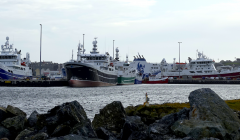
“Shetland can learn from Faroe, but there are also things that they can learn from us. Firstly, how we manage our inshore fisheries – our regulating order is something to be really proud of – the only MSC certified scallop in the whole of Europe and the only MSC certified brown crab in the world.
“The Faroes fisheries minister was also deeply impressed by our top slicing of mackerel quota – a recent SNP policy that has pushed tonnage down into the under 10m local fleet, enabling around 200 small local boats to earn a living.
“Secondly, Shetland has always been a melting pot. We are a proud island with a proud heritage that welcomes those that are born here or those who move here to call Shetland home.
“Our communities are strengthened by our diversity. Our approach to integration is something I was proud to share on our delegation last week and something that the Faroes can learn from Shetland.”
If there was one thing that you would take from Faroe and introduce here, what would it be?
Goodlad: “There are several things that Faroe is doing right when it comes to vocational education, public ownership of lifeline services and tighter restrictions to AirbnB to enable locals to get onto the housing ladder. But the number one thing for me that stood out was community ownership of energy.
“Both islands are blessed with world-class wind, but the outcomes could not be more different. In the Faroes, 100 per cent community-owned wind farms, run by public utility SEV, keep prices low, integrate with hydro, batteries and solar, and reinvest profits back into local infrastructure.
“Fuel poverty is not a concept in Faroes. Contrast that to Shetland – the privately owned Viking Energy is one of Europe’s largest onshore wind farms – is frequently curtailed, and yet around a quarter of our community lives in fuel poverty.
“The very same wind that creates profit for Viking energy, strips Shetlanders of warmth in our homes. Something doesn’t add up there. These are political choices.
“Energy is reserved to Westminster, leaving Scotland with ‘all the energy and none of the power’, while Faroes proudly say, ‘energy is ours’. It doesn’t have to stay this way: Scotland’s energy must be brought into Scotland’s hands and as local as possible across our islands.”
The general feeling in the isles here is that things are being done to Shetland, and local politicians have no or little influence over developments. Your campaign of becoming Shetland’s next MSP appear to largely be based on the feeling that Shetland is getting a poor deal.
Goodlad: “I don’t believe that Shetland is getting a bad deal. We get 1.5 times the national average spent from the Scottish Government, our NHS waiting lists are shorter than those on the mainland, our social care (although facing challenges) is excellent, we have a strong seafood industry, and our islands are a safe place to live.
“But I know that we could get a better deal, one that safeguards the future of our islands more and invests into the infrastructure for the next generation so that we secure this idea that Shetland’s best days lie ahead of us, and not behind us.”
Is Shetland in a position to accept more autonomy or self-governing when the real problem locally appears to more a weak local democracy, a lack of transparency and accountability?
Goodlad: “No one will give Shetland the autonomy that we need. We must demand that ourselves. The door is open under an SNP government, but Shetland must turn that handle.
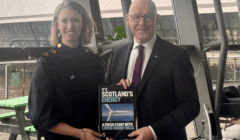
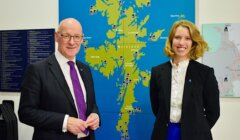
“The First Minister was crystal clear when I hosted him here in Shetland in August: ‘Come with a shopping list’ for more autonomy. The Scottish Government’s islands act of 2018 is definitive – our local authority can request additional powers to be developed out from Holyrood. To date, the SIC has submitted no such request.
“Whilst in Faroe last week, the deputy PM Sirið Stenberg was very clear about this. ‘Just start’ was her answer. It is this can-do attitude of our neighbours that is inspiring and motivating to me.
“My starter pack would be local planning over onshore renewables, local control over crown estate, full marine planning, and regulation.”
So, what is your plan for Shetland, based on your Faroe findings but also considering the limitation of additional self-government that can be granted under the Scottish devolution settlement?
Goodlad: “One of the main learnings for me is that Faroe is a self-confident place.
“As a people, they are confident enough to stand behind their own successes, but perhaps even more importantly for me is that they are confident to stand behind their own mistakes because they realise that mistakes are how they learn and how they progress.
“When folks take risk in our Shetland community, we tend to take them down. Tall poppies have a tough time here and I would argue that is to our disadvantage as a society.
“We need to collectively come together to chart a new direction for Shetland, a direction that will involve taking some risks. And our newly elected MSP and the SIC will need to work close together to be bold, be decisive and to create a strategy that takes account of our key sectors – energy, tourism, seafood, and textiles.
“After almost six months spent in ‘listening mode’, I have gathered an important set of facts, figures, and ideas that folks have shared with me. “And it is this that is forming the bases of what our manifesto will be. It’s important to me that folks in Shetland feel ownership to this.
“Our Shetland SNP manifesto will be launched in March, and I look forward to setting out in more detail what our strategy is then. I am confident it will be a vision that gives folks hope once again in our future.”
Become a member of Shetland News
Shetland News is asking its readers to consider paying for membership to get additional perks:
- Removal of third-party ads;
- Bookmark posts to read later;
- Exclusive curated weekly newsletter;
- Hide membership messages;
- Comments open for discussion.
If you appreciate what we do and feel strongly about impartial local journalism, then please become a member of Shetland News by either making a single payment, or setting up a monthly, quarterly or yearly subscription.