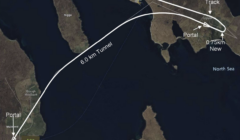
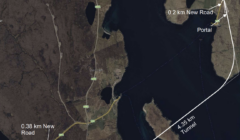
Constructing tunnel to Yell could require budget of £400m, estimates suggest

A BUDGET of £400 million would be required to plan and construct a tunnel to Yell, according to estimates.
This comprises around £327 million in capital costs, £50 million of risk and contingency and £25 million of pre-construction work.
An estimated total figure has also been released for a possible tunnel to Bressay, which stands at £255 million.
Further estimates for possible tunnels to Unst and Whalsay are to be released in due course.
No decisions have yet been made, with councillors set to decide on the best future transport options for Shetland’s inter-island connectivity at a meeting in June.
Shetland Islands Council’s development director Neil Grant said at a media briefing on Wednesday that “all the options” in the ongoing inter-island transport study feature large numbers, and that includes running and upgrading ferry services.
But he said the SIC is at a point in time when there may be an opportunity to get tunnels “across the line”.











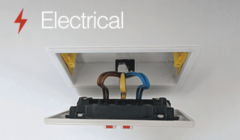











“It needs the government to be absolutely behind us,” Grant said.
“But I think the case that we’re making and the attention that the government is paying on this…there’s an opportunity here that I think we really need to focus on.”
Andy Sloan, who is executive vice president of consultants and tunnel experts COWI, said it was important to view the cost figures in a wider national context rather than a Shetland context.
But he said tunnels to some of Shetland’s islands could be “utterly transformational” and added that work undertaken locally could be a “roadmap” for how to deliver infrastructure in rural Scotland.
Become a member of Shetland News
Stantec transport planner Stephen Canning meanwhile said that even if tunnels are progressed there still needs to be a “substantial programme of ferries investment” over the next 10 to 15 years.
He also said the business case process is designed to come up with “pros and cons” for Shetland’s inter-island routes and give information to councillors for decision – it is “categorically not about trying to pick a winner”.
Drop-in sessions with island communities are being held this week, with events in Bressay and Yell taking place on Monday and Tuesday. The next sessions will be in Unst and Fetlar today (Wednesday), with the team heading to Whalsay on Thursday.
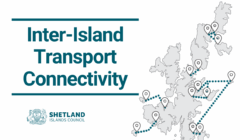
Work has been ongoing for some time by consultants Stantec, COWI and Mott Macdonald on future options for Shetland’s inter-island transport network.
With Fair Isle essentially accounted for with a new ferry on the way, the project has been assessing the eight island routes – Yell, Unst, Fetlar, Whalsay, Bressay, Skerries, Papa Stour and Foula.
An earlier report saw tunnels – which would be constructed by a “drill and blast” method – scoped into consideration for Yell, Unst, Fetlar and Whalsay.
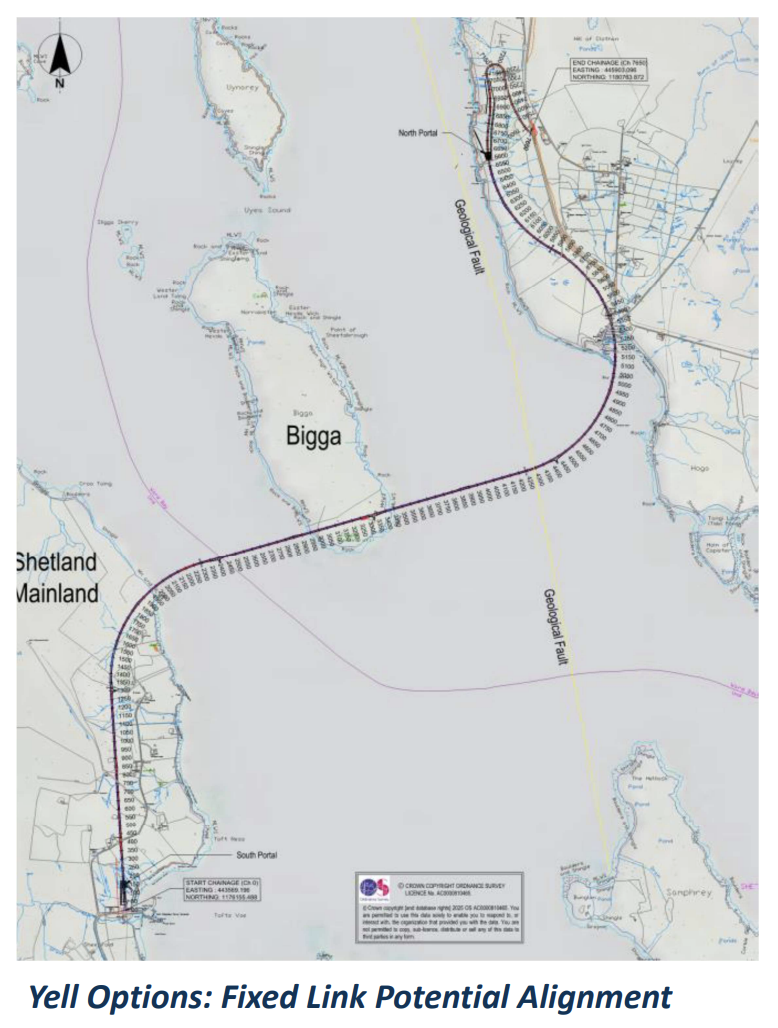
A ‘fixed link model’ study has also been carried out using a tunnel to Yell as a test case, with detailed design work undertaken and engagement with contractors and financiers.
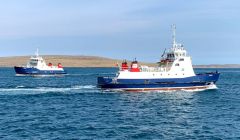
While tunnels may have grabbed many of the headlines, ferries – including vessel replacement and port infrastructure – is also part of the equation.
Speaking on Wednesday, Grant confirmed that once councillors decide on options for the eight routes then a 30-year implementation plan will be created.
“That will prioritise what goes first and why and what needs to happen in terms of short steps to keep the whole thing in play,” he said.
“It might well be that we’ve got several projects running at the same time.”
Sloan meanwhile said there is “no question” about the technical feasibility of tunnels in Shetland.
However, how they are paid for remains the key question.
He said there could be three options at play – private finance, government grants or SIC borrowing.
Sloan suggested that a mix of government funding and borrowing could end up being a possible solution.
Grant said the Scottish Government has been “very supportive” of the SIC in getting to this stage so far.
As to some of the finer details, consultants have been working on an assumption that any tunnel would have a 40mph speed limit, and two lanes.
The FLM project engaged three contractors – one from Norway and two from Austria – to explore construction costs and risks for a tunnel to Yell.
Sloan said all three contractors said they would hypothetically be happy to work in Shetland.
He added that through the work already undertaken, including the FLM project, the SIC is leading the way when it comes to knowledge about delivering tunnels in Scottish islands.
Sloan also said if councillors decide to press ahead with fixed links, it is now up to whether Scottish or UK ministers “have the ambition to actually back the fantastic work” that has been undertaken.
Materials exhibited at this week’s drop-in session in Yell highlighted a number of existing transport issues, including ferry reliability, resilience and capacity.
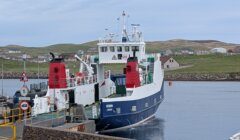
They said the ‘do something’ option for ferries could include two new vessels, and new waiting rooms in Toft and Ulsta.
A ‘do max’ scenario for Yell Sound includes three new vessels, significant port upgrades and a 24/7 service.
Estimated capital costs over 60 years range from £187 million for ‘business as usual’ to £280.3 million for ‘do something’ and £438 million for ‘do max’.
For gross operating and maintenance costs, the estimated 60-year cost for a 6.5km tunnel is £90 million. The ‘do max’ option is £649.5 million, with ‘do something’ coming to around £469.1 million and ‘business as usual’ nearly £361.6 million.
Documents also include a ‘present value’ over 60 years, which aims to account for how spend over happen in stages – such as when ferries are needing replaced.
This converts all future costs and benefits into today’s value (known as present value) so that they can be compared.
For tunnels that cost is £539.2 million, ferry do max is £535 million, ferry do something is £333.1 million and business as usual £295.6 million.
There are also estimates that a fixed link to Yell – which could take eight years to come fruition after the initial go-ahead – could generate between £30 million and £60 million of additional economic output a year, with much of this driven by aquaculture.
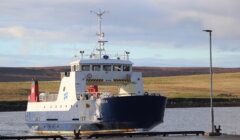
For Bressay, a ‘do something’ option is listed as a replacement for the Leirna ferry and infrastructure upgrades on the island in addition to a new waiting room in Lerwick.
The ‘do max’ option also includes a suggestion for an on-request service overnight, and a possible new pier.
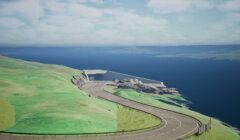
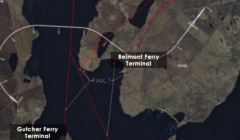
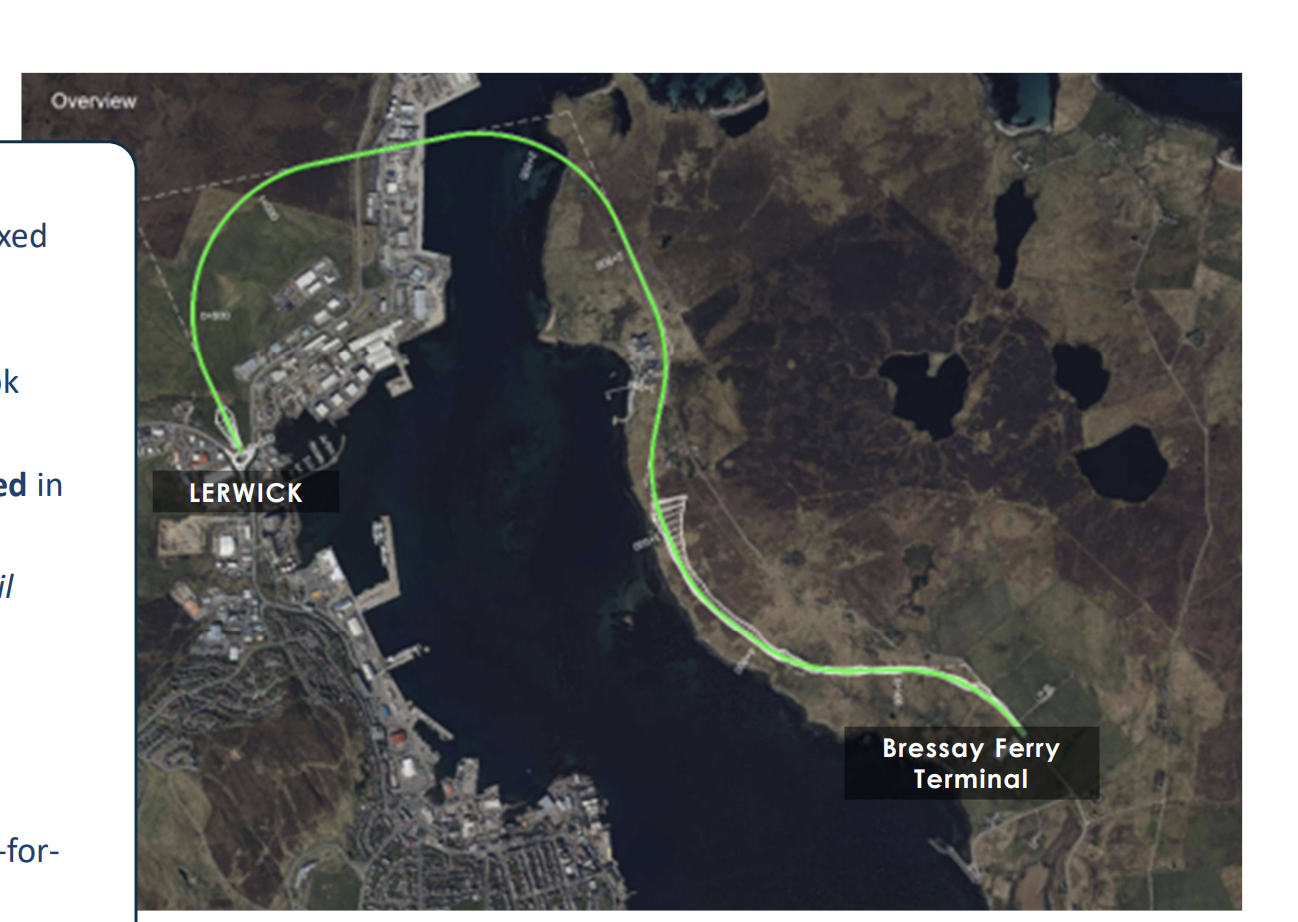
Indicative proposals for a tunnel to Bressay shows how entrance on the Lerwick side would begin near to Gremista before following a curved shoreline alignment and descending underwater.
The tunnel would be 3.3km long, but adding in extra roads it would cover 5km.
Estimated capital costs over a 60-year period range from £135 million (business as usual) to £224 million (fixed link).
The ‘do something’ option has an estimated capital cost of £135.4 million and ‘do max’ is £157.3 million.
For gross operating and maintenance, this ranges from £44.4 million for a tunnel and £175.6 million for the ‘do max’ ferry option.
The ‘present value of costs’ over 60 years is £343 million for tunnels, £186.9 million for ‘do max’, £159.3 million for ‘do something’ and £157.1 million for ‘business as usual’.
For tunnels, Sloan said the capital cost includes a number of elements from site establishment, including worker accommodation, and roads to “portal” structures and the tunnel itself.
Grant said in his view if a ferry option is selected but over time it costs around the same as a tunnel, that is a “missed opportunity”.
When asked if Yell would likely to be the first tunnel, considering the work already undertaken for the route via the FLM project, the development director said it was up to councillors to decide.
But he said when looking at the material being put on show to the communities, there is a “natural prioritisation” across the four routes.
And it has been argued that Yell and Unst have more “economic justification” given the aquaculture, fishing and space interests between the two islands.
There is an assumption that a toll system would be in place on any tunnel, and is predicted to bring in more revenue than ferries due to the greater access on offer.
However Sloan said tolls would in reality only help to pay for ongoing maintenance.
He said for Yell Sound the estimated yearly maintenance cost is £1.5 million, which could involve two or three full-time jobs.
The team said they were aware of some general concerns from communities about the potential loss of ferry jobs in the advent of tunnels.
But Canning said “equally the service has had fairly well publicised issues in finding crew and filling posts, so that is recognised as a real resilience risk as well”.
Sloan also said tunnels could also have the potential to increase job prospects in islands.
“Part of the process of connecting the islands is all about economic growth, so the transformation would include the broader economic well-being of the connected islands,” he said.
Become a member of Shetland News
Shetland News is asking its readers to consider paying for membership to get additional perks:
- Removal of third-party ads;
- Bookmark posts to read later;
- Exclusive curated weekly newsletter;
- Hide membership messages;
- Comments open for discussion.
If you appreciate what we do and feel strongly about impartial local journalism, then please become a member of Shetland News by either making a single payment, or setting up a monthly, quarterly or yearly subscription.