
News / ‘It’s not art’ – isles artists rail against use of AI

What do artificial intelligence (AI) and art have in common?
For three Shetland artists, the answer is the first three letters – and that’s it.
AI-generated images have dominated social media in recent weeks as part of a trend where people produce images of themselves at work, or surrounded by some of their favourite hobbies.
Community halls, clubs and Up Helly Aa festivals have joined in by using posters created through AI to promote everything from quiz nights to hop day celebrations.
The appeal of AI and websites such as ChatGPT is obvious – it’s quick and it’s free.
But with the world reckoning with AI’s effect on the environment, its mimicking of other artist’s works and its use of private data, questions are being asked about how ethical it really is.
Keen drawer Leanne Spence, graphic designer Chloe Keppie and famed folklore artist Dirk Robertson are united in their dislike of AI and its use to create ‘art’.











In Chloe’s job at a Glasgow design company, she says her and her colleagues have become accustomed to people bringing in AI designs and asking them to echo them.
“People almost want things yesterday now, so they’ll mock things up with AI and ask you ‘can you do something with this’,” she said.
“But that’s not something I would want to do. It just looks crap.
“Clients will say they can do something with AI immediately and ask, ‘how fast can you do it’, so we’re all having to work faster.”
The musicians that Chloe routinely works with in designing artwork for bands in Glasgow and beyond are facing similar dilemmas.
AI music is on the rise too, with increasing complaints from Spotify users about the streaming website inserting artificially generated songs into playlists.
Become a member of Shetland News
“We’re all kind of looking after each other,” Chloe told Shetland News. “AI is there now, and it’s everywhere.”
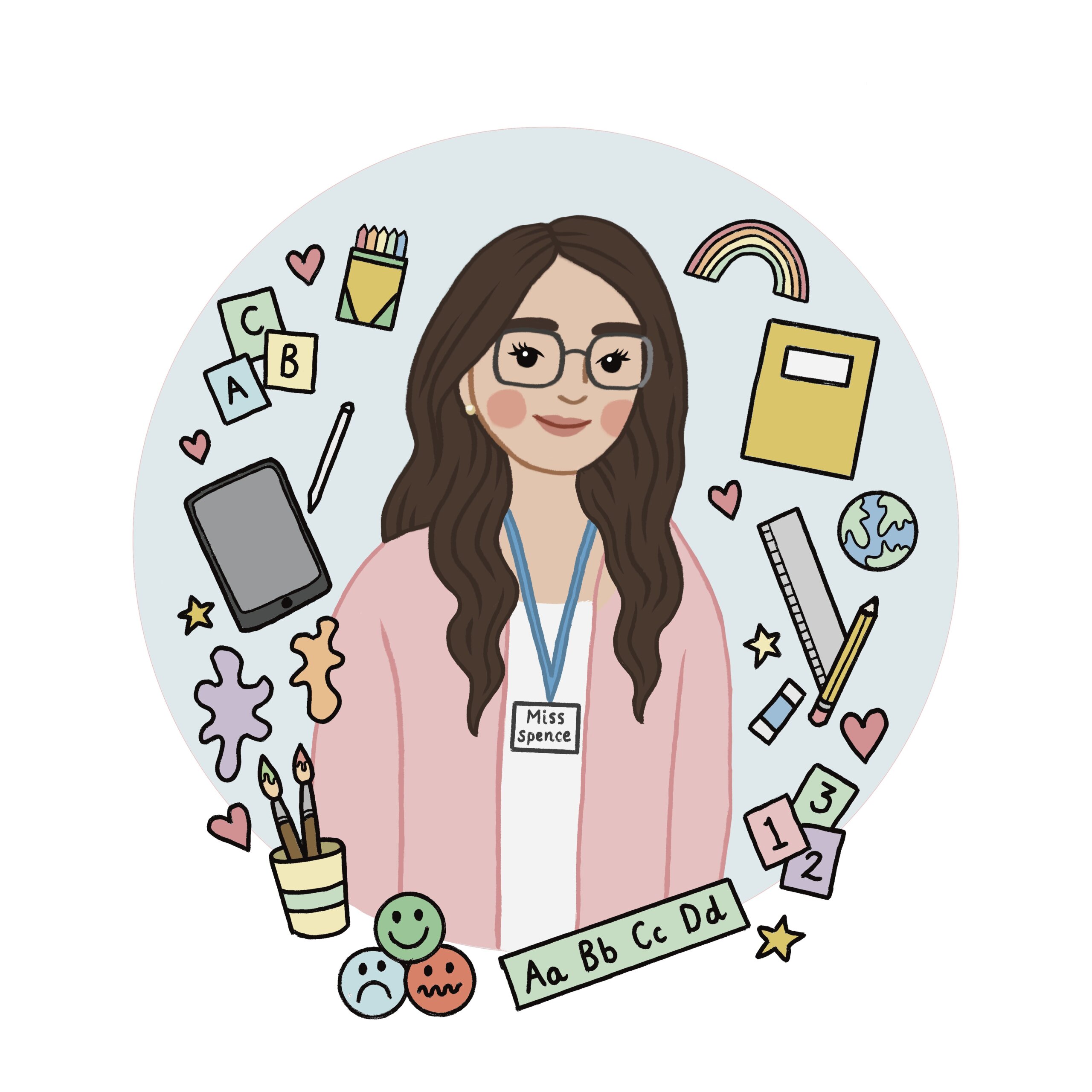
Leanne took to social media earlier this month to share a hand-drawn image of herself, accompanied by items from her day job as a learning support worker.
Intended as an antidote to the ChatGPT caricature trend, Leanne wrote that it was important to remember that AI “isn’t real art, isn’t real creativity and is slowly taking over in our modern world”.
She said she had become “frustrated” by her Facebook feed being overcome with AI-generated images.
“I was shocked at the amount of people creating the over exaggerated cartoons, even small business owners using the pictures to advertise their professional businesses,” Leanne said.
While she said she could see the benefits of AI – which she admitted “can be a great tool” – Leanne said she hated the way it was being used on social media.
“It’s being used in such wasteful ways which serve zero positive impact,” she said.
“What I found really concerning was the prompt being used to create these images: ‘use everything you know about me’.
“The fact that AI is collecting and analysing all of our personal information and data to create these images, yet nobody is questioning what happens to this data or the negative impacts this is having on our environment.”
Google’s own AI overview – who better to ask – admits that AI has a “significant environmental footprint”.
This is mainly driven by “massive energy consumption in data centres” and high water usage for cooling electrical components.
Despite her frustrations about the wide use of AI art, Leanne admits she was nervous about sharing her own drawing to Facebook.
“I didn’t want to offend or shame anyone who I knew personally had already participated in the viral trend,” she said. “I simply just wanted to make people stop and think before ‘just jumping on the bandwagon’.”
Chloe shared Leanne’s frustration about the use of ChatGPT in the latest social media craze, in which she said “nonsensical images” were generated for little purpose.
“It just feels pointless. It might be fun for a few seconds, but that’s it.”
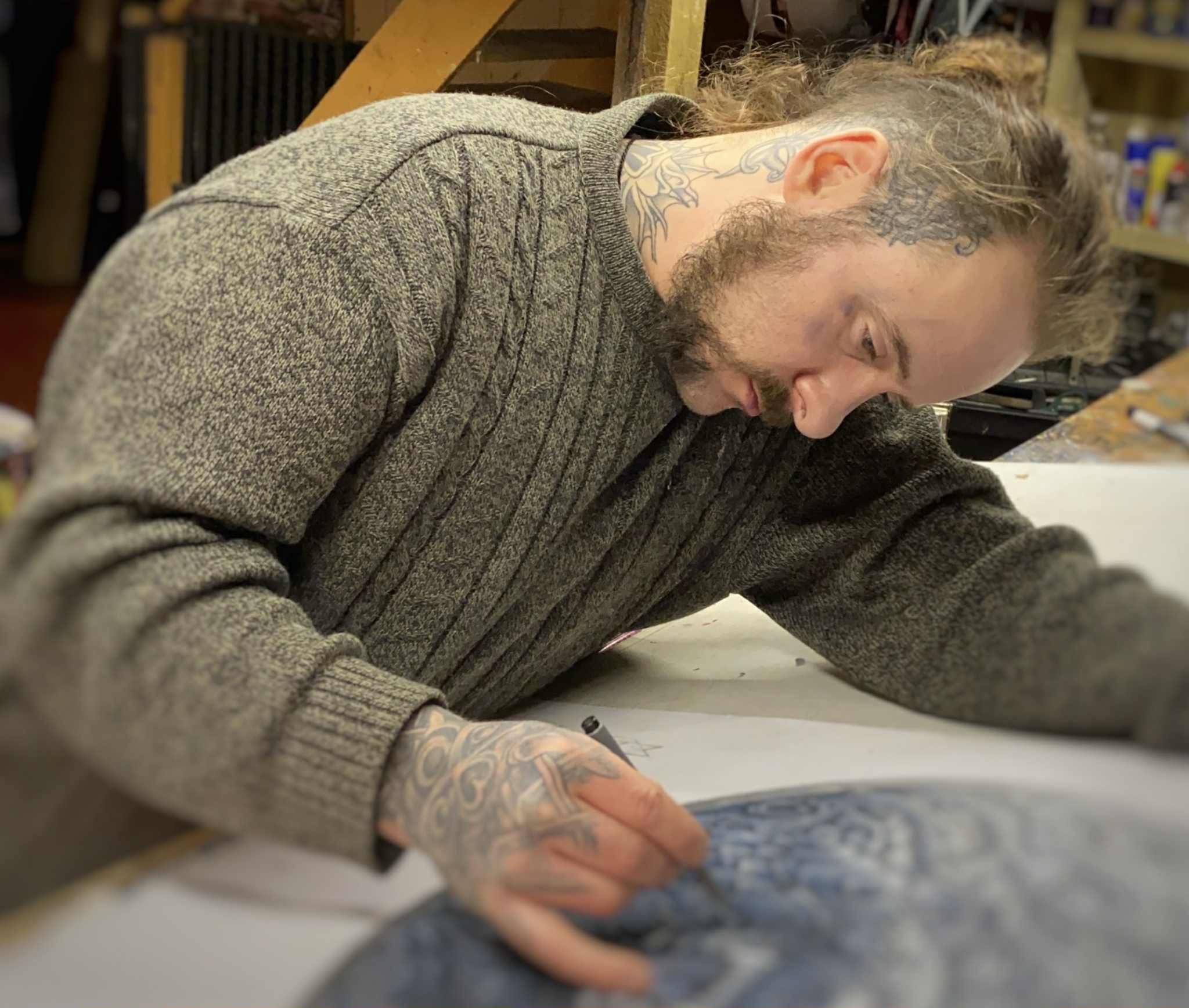
Artist Dirk, famed for his enduring works with Up Helly Aa squads around the isles, was even more critical of the use of AI in a social media post earlier this month.
“AI generated images are not art,” he wrote.
“It’s dumb. It’s meaningless. It makes rich people richer. It steals from artists.
“You didn’t make anything at all and you cannot take credit for it. Don’t use it.”
Both Chloe and Leanne were more pragmatic in their views on the use of AI in other industries, but both believe it has no place in the art world.
“I think a lot of people do realise that it’s terrible,” Chloe said.
“I’m not too concerned about losing my job yet because I think people still value the human touch. They want something that feels real and has been created by a person.
“I don’t think the design industry is a dead job yet.”
She said AI “does have benefits if you use it carefully”, adding she had seen it used adeptly at a previous agency when working with animation.
But she said she would never use it in any way for creating artworks or images.
“The part of the job I enjoy most is the creation part,” she said.
“You don’t get any joy if you play in a command into the website. AI cuts all of that out.”
Leanne was unequivocal in her view that AI “has no place in art at all”.
“I think it devalues humans with real skills and talents,” she said.
“AI’s ability to generate instant high-quality images is already reducing the demand for real human creatives such as illustrators, designers and musicians, going on to threaten their livelihoods.”
She said she had recently started up her own wedding stationery business, and she prided herself on the fact that her all her work was drawn by her hand.
However she said she was already finding it “increasingly difficult” to advertise herself against AI designs which were dominating the industry.
Chloe believes AI will be seen as a fad which is “fun at first” but eventually gives way to more analogue methods again.
“Look at things like vinyl skipping or film pictures not being in focus, the things the people were annoyed about back in the day.
“People are going back to that because that’s what they want. AI is obviously so precise, and people are realising they like the imperfections.”
Leanne said AI would never be a “replacement for personal creativity”.
“I think AI-generated images will make human made art more valuable in the future,” she said.
“AI art lacks any emotion or originality and this along with our imperfections are what makes human art ‘real’.
“There is something about creating art with your own hands and mind that AI can never replace.”
Become a member of Shetland News
Shetland News is asking its readers to consider paying for membership to get additional perks:
- Removal of third-party ads;
- Bookmark posts to read later;
- Exclusive curated weekly newsletter;
- Hide membership messages;
- Comments open for discussion.
If you appreciate what we do and feel strongly about impartial local journalism, then please become a member of Shetland News by either making a single payment, or setting up a monthly, quarterly or yearly subscription.