


Business / Self-catering provider’s ‘urgent concern’ over proposed increases to business rates
Jennifer Jamieson says Hillhead Self-Catering is considering selling off its largest property as the proposed increase in rates would make it unviable

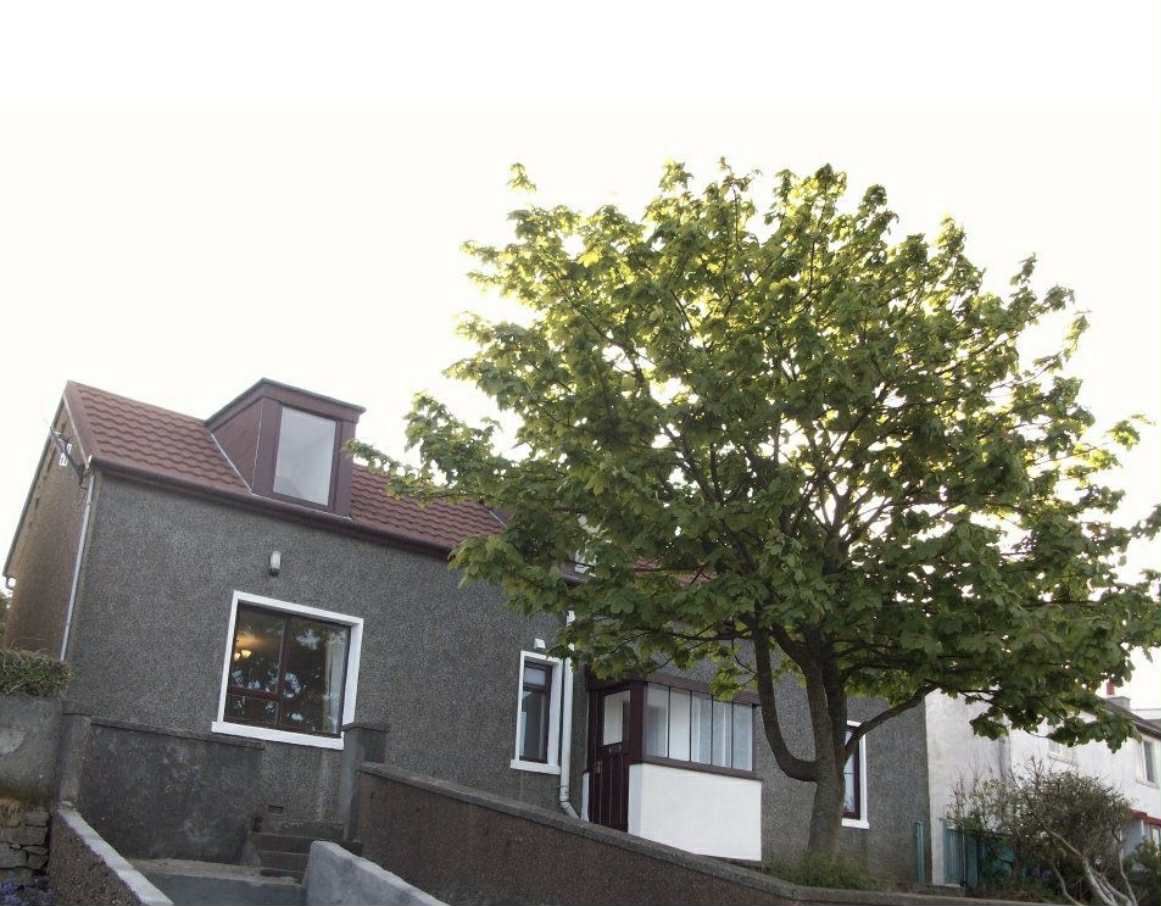
A LERWICK-based self-catering accommodation provider says she and her partner are considering selling off their largest property due to a proposed hike in business rates.
Jennifer Jamieson, who runs Hillhead Self-Catering alongside Philip Leask, said many of their rateable values are set to nearly triple this year, which would result in much larger non-domestic rates being billed – echoing similar concerns elsewhere in Scotland.
They are now considering selling their largest property – a five-bedroom unit – with the rateable value proposed to increase by nearly 163 per cent.
The proposed rates increase could be “devastating” for their business, Jamieson said, and has even prompted her to look for different jobs.
She said their five-bedroom property has a rateable value of £3,790, but this is set to rise to £9,700 from April.
Rateable values are used to determine the non-domestic rates bill for a property.
But Jamieson said the new proposed rateable value would make the five-bedroom house unviable.
















It comes ahead of a proposed non-domestic rates revaluation in Scotland this year, which has sparked significant concern from the Association of Scotland’s Self-Caterers (ASSC) and some politicians.
The ASSC claims a new rental-only valuation methodology is producing “extreme, unjustified and potentially devastating” draft increases for businesses.
It said many operators are now facing average increases of around 120 per cent, with some nearing 300 per cent.
The proposed changes are not yet set in stone, and self-catering providers are being encouraged to make their concerns known.
But assessor and electoral registration officer for Orkney and Shetland, Robert Eunson, said things are “reverting to the purest form of valuation that there is”.

Non-domestic rates are a type of tax paid by businesses, and for self-catering operators this starts from the rateable value given to a property by their local authority’s assessor.
Become a member of Shetland News
It is the Scottish Government that sets elements like the tax rate and any reliefs.
Jamieson said not only would non-domestic rates stand to rise, but water charges would increase too as they are based on a property’s rateable value.
She said the threshold for small business rates relief has also reduced from £15,000 to £12,000.
Jamieson has written to Shetland MSP Beatrice Wishart to raise her “urgent concern” about the proposed increases.
She said they have spent the last 15-plus years building a successful business which has involved significantly renovating properties into self-catering units.
And she added the business has already faced significant challenges through needing to comply with new regulations, and “costly experiences” with long-term rentals.
“This sudden increase feels like it could be the final blow, potentially forcing us to sell some properties and leave the self-catering sector entirely,” Jamieson warned.
Scottish assessors decide on the methodology, and although they are independent of government, it has been suggested that ministers could use legislative powers to pause the revaluation for self-catering accommodation.
Local assessor Eunson encouraged anyone with concerns about their proposed rates to get in touch.
“What we are trying to achieve is establishing net annual value, and rental values are the fundamental starting point for that,” he said.
“Self-catering properties are dwellings excluded from the valuation list by virtue of the fact that they meet the criteria set out in The Council Tax (Dwellings and Part Residential Subjects) (Scotland) Regulations 1992.
“Given the supply and demand dynamics for housing in Lerwick, as a minimum the hypothetical tenant for a self-catering property would have to compete with standard housing rents.”
He was unable to discuss individual cases, but added that his office “would always welcome discussion with ratepayers to hear any concerns they may have about their NAV (net annual value)/RVs (rateable value), and consider any evidence that points to alternative values”.
“This can be done informally at any point, and from 1st April 2026, ratepayers will have the opportunity to submit a formal proposal to alter the value,” Eunson said.
Meanwhile the ASSC, Scottish Tourism Alliance (STA), Scottish Land and Estates, Federation of Small Businesses and Scottish Agritourism wrote to public finance minister Ivan McKee last year requesting urgent intervention and a review of the valuation approach.
The ASSC said past revaluations have taken into account elements like profitability, property type and “quality bands”, but this year’s one will be based solely on rental information.
Information from the Scottish Assessors’ Association said that “in the absence of local rental evidence, self-catering accommodation should be valued using rates per bed space derived from an analysis of rents from properties throughout Scotland”.
But the ASSC said analysis only looked at 501 out of 16,513 self-catering properties in Scotland, and a national sample of 135 rented properties.
Location categories are also included in the methodology – prime city centre, high demand location, fair demand location and low demand location.
Jamieson said her five-bedroom property has been reclassified as being in a “high demand” location, but she highlighted how bookings are low until the Shetland Folk Festival at the end of April.
The ASSC said assessors can still adjust draft rateable values before 16 February, and has encouraged self-catering providers to write to assessors if they feel their valuation appears unrealistic.
Fergus Ewing, independent MSP for Inverness and Nairn and Scotland’s longest serving tourism minister, said that “unless the Scottish Government intervenes now, these rates valuation notices will directly result in the assassination of thousands of small hard working self-catering businesses”.
ASSC chief executive Fiona Campbell said businesses which stand to be affected are “absolutely vital to the fabric of rural and island Scotland, yet many are telling us they are reaching breaking point”.
“Alongside the rising costs and regulatory changes of recent years, the uncertainty created by these draft rateable values is piling enormous pressure on both livelihoods and wellbeing,” she added.
First minister John Swinney said in parliament in December that the Scottish Government was looking at the issue.
Speaking at the time, he said he understood concerns which had been raised in the chamber by Conservative MSP Murdo Fraser.
Fraser noted that assessors are independent of government, but said “ministers set the statutory framework” under which they operate.
Swinney said he was concerned about what he has heard regarding some of the decisions made.
He said the minister for public finance has “already engaged in considering the implications of these issues and what was driving the changes in the methodologies that are producing those results”.
“I assure Mr Fraser that the issue is already being addressed by the government,” the first minister said.
“It is an important issue, because it will affect the sustainability of many businesses as a consequence of the proposed changes. That is being pursued by ministers at this time.”
In a response to parliamentary questions from MSPs, the government also said that decisions on non-domestic rates policy for 2026/27, including reliefs, will be set out in the next Scottish budget, which is due to be published later today (Tuesday).
Become a member of Shetland News
Shetland News is asking its readers to consider paying for membership to get additional perks:
- Removal of third-party ads;
- Bookmark posts to read later;
- Exclusive curated weekly newsletter;
- Hide membership messages;
- Comments open for discussion.
If you appreciate what we do and feel strongly about impartial local journalism, then please become a member of Shetland News by either making a single payment, or setting up a monthly, quarterly or yearly subscription.