

‘A treasure of history’: how a German emigrant ship became part of Shetland heritage

“WE HAVE been hardly here for 20 minutes and already found some exciting letters”, Robert Wuchatsch says excitedly when we meet in the Shetland Archives earlier this week.
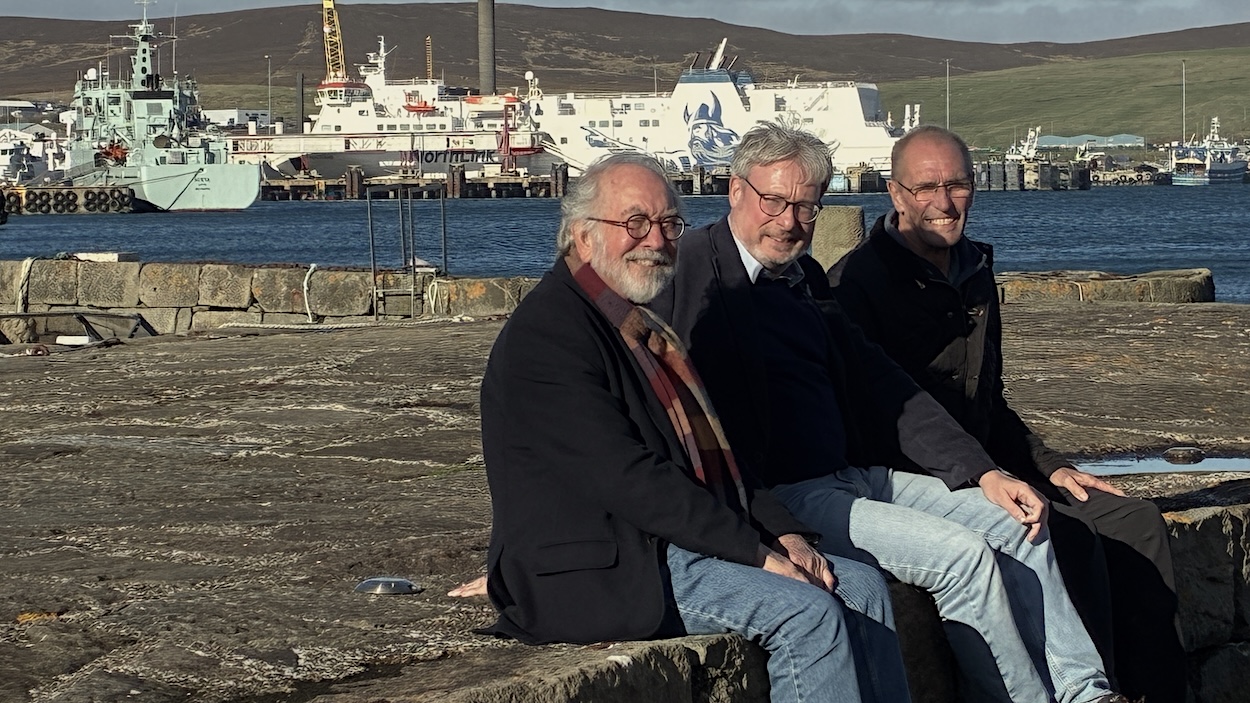
Photo: Hans J Marter/Shetland News
The Australian has been busy looking through letters written by merchant and shipbuilders Hay & Co more than 150 years ago, inquiring what to do with crew and cargo of the sailing ship Pribislaw that had run aground on the island of Bigga, in Yell Sound, in 1870.
But this is not the story of an Australian of Shetland descent researching his family history; it’s far more complicated, and involves three guys from different parts of the world all contributing pieces to a fascinating jigsaw of historical research.


























It also concludes Robert’s almost 50 years of researching his family history. Born in Australia 76 years ago to parents of German descent he had, until 2002 at least, no idea where Shetland was and had no intention of going to visit.
That all changed when remains of the Pribislaw, foundered on Bigga in the late 19th century, were dug up from Hays Dock as part of the building work of the new Shetland Museum and Archives.
Robert had started researching his own family history back in 1978 when he discovered that half of the population of Westgarthtown – the German settlement he grew up in – were descendants of people who had arrived in Australia on board the emigrant ship Pribislaw.
Help keep Shetland’s news open to everyone

Good local journalism takes time, care and people on the ground. Membership helps us keep reporting the stories that matter to Shetland — and keep them free for everyone to read. Members get a weekly newsletter created especially for them, local ads only, and can bookmark stories and join the conversation in the comments.
His own great-grandparents Johann and Magdalene Wuchatsch, originally from a village near Bautzen, east of the Dresden, and their five children were among the 229 people who boarded the sailing ship in Hamburg on 23 August 1849.
Like so many, and not just in Germany, they emigrated in the hope of a better life, particularly for their children and to escape hunger, poverty and social upheaval.
The 92-metre vessel made an unscheduled stop at Rio de Janeiro at the end of November that year amid complaints about the quality of food on board and, newly provisioned, continued her long journey to Melbourne where she arrived on 2 February 1850.
The Pribislaw made six further such journeys to Australia before running aground in Yell Sound in 1870 with a cargo of pit props for coal mines destined for Sunderland in England.
The wreckage of the 350-ton barque was subsequently bought by Hay & Co who took her to Lerwick, where she was beached in the East Quay of Hays Dock, stripped of her rigging and converted into a large store and workshop.
This is how Yorkshire man Matt Kirby remembers her when he lived right next to the Pribislaw (see photo) in the early 1970s while working for fish processors Shetland Seafood, in Browns Road, and living in an accommodation block overlooking the ship.
“I lived right next door to the bow of Pribislaw,” he recalls, “I was asking people at the time what was this boat and they said it had something to do with the Armada, but that couldn’t be right.”
It took another 50 years before he got an answer to that question.
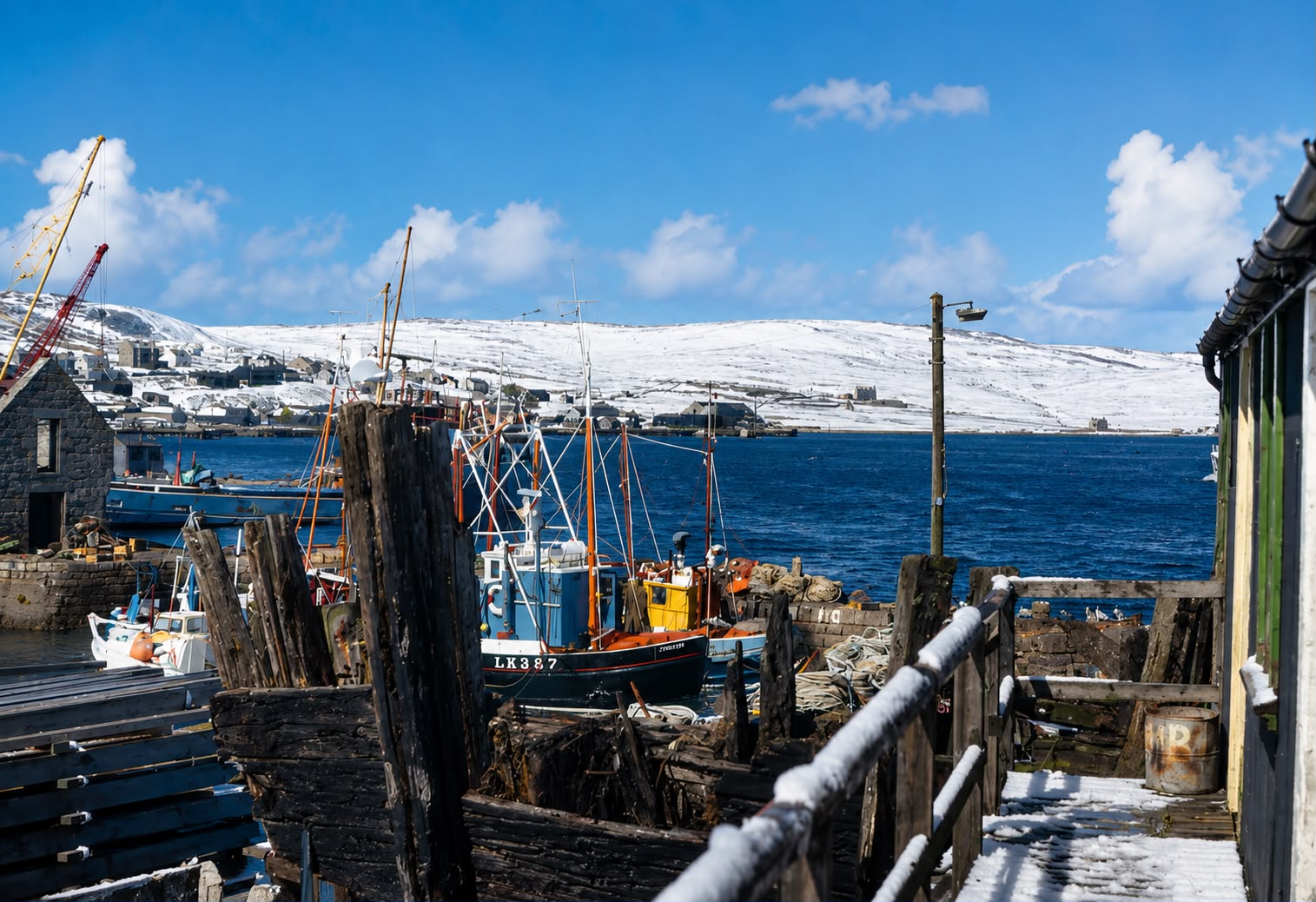
Photo: Courtesy of Matt Kirby
Meanwhile Robert had been busy piecing together his family history. “I got hooked, and I am still researching,” he says with a big smile in his face, summarising almost five decades of a passion of searching for the minutest detail, and that has taken him twice from down under to Shetland.
“I now know of 190 people of the 198 people who arrived on the ship on that trip,” he explains, adding that there is huge interest in Australia. “It’s a focal point for descendants,” he adds.
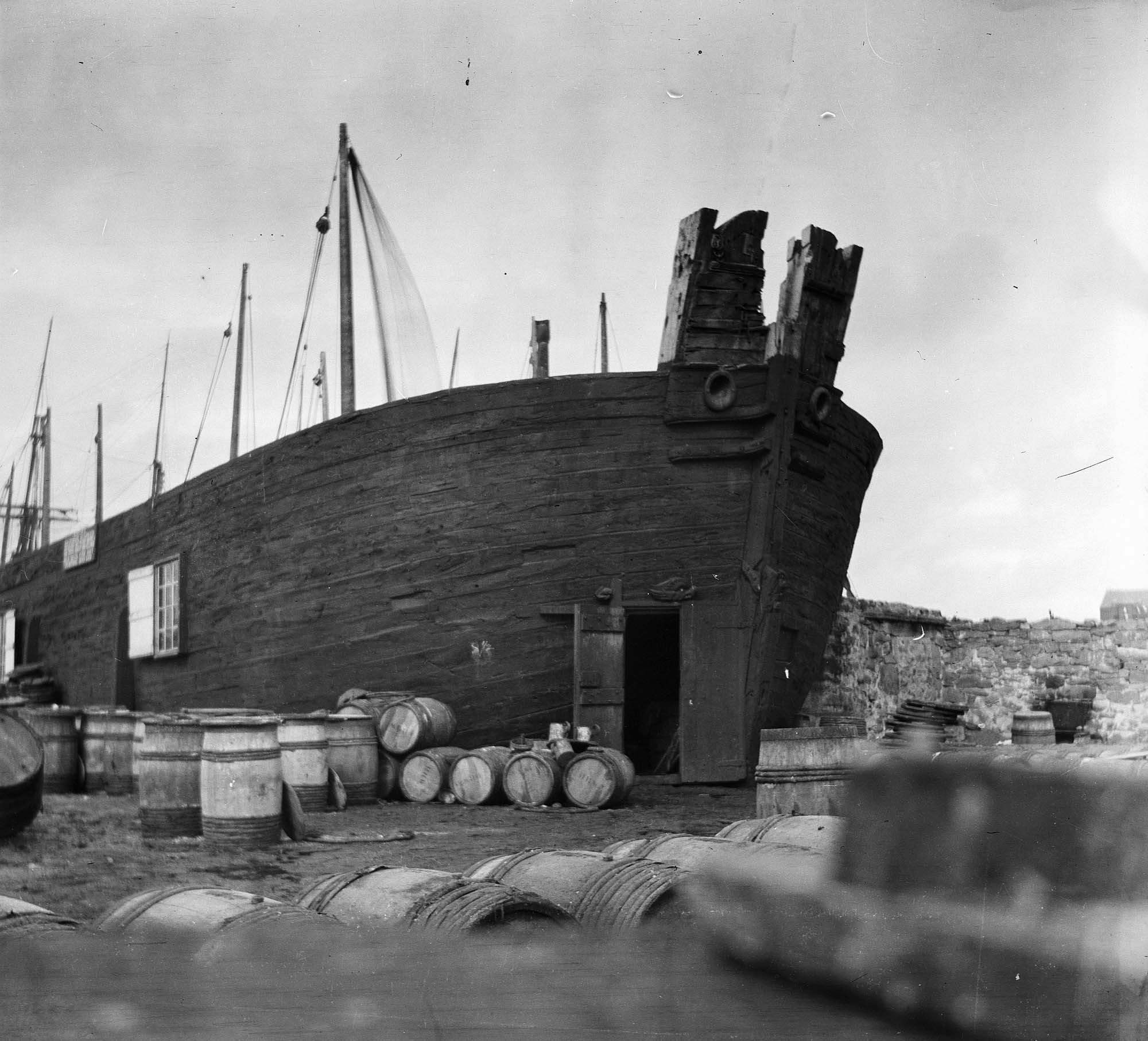
And so he was delighted when he discovered that several tonnes of timber belonging to the Pribislaw had been excavated during the redevelopment work at Hay’s Dock, part of the building work of the new Shetland Museum and Archives, and shipped to Australia, in 2005.
He and his wife visited the isles in June of that year and, with the help of then assistant curator Dr Ian Tait, they were able to piece together the vessel’s extraordinary story.
“We had visited Lerwick in the hope of finding some newspaper reports of the ship’s grounding, and if we were lucky a photograph,” he said at the time.
“We were both surprised and thrilled to discover the Pribislaw had a long life off the sea at Hay’s Dock.”
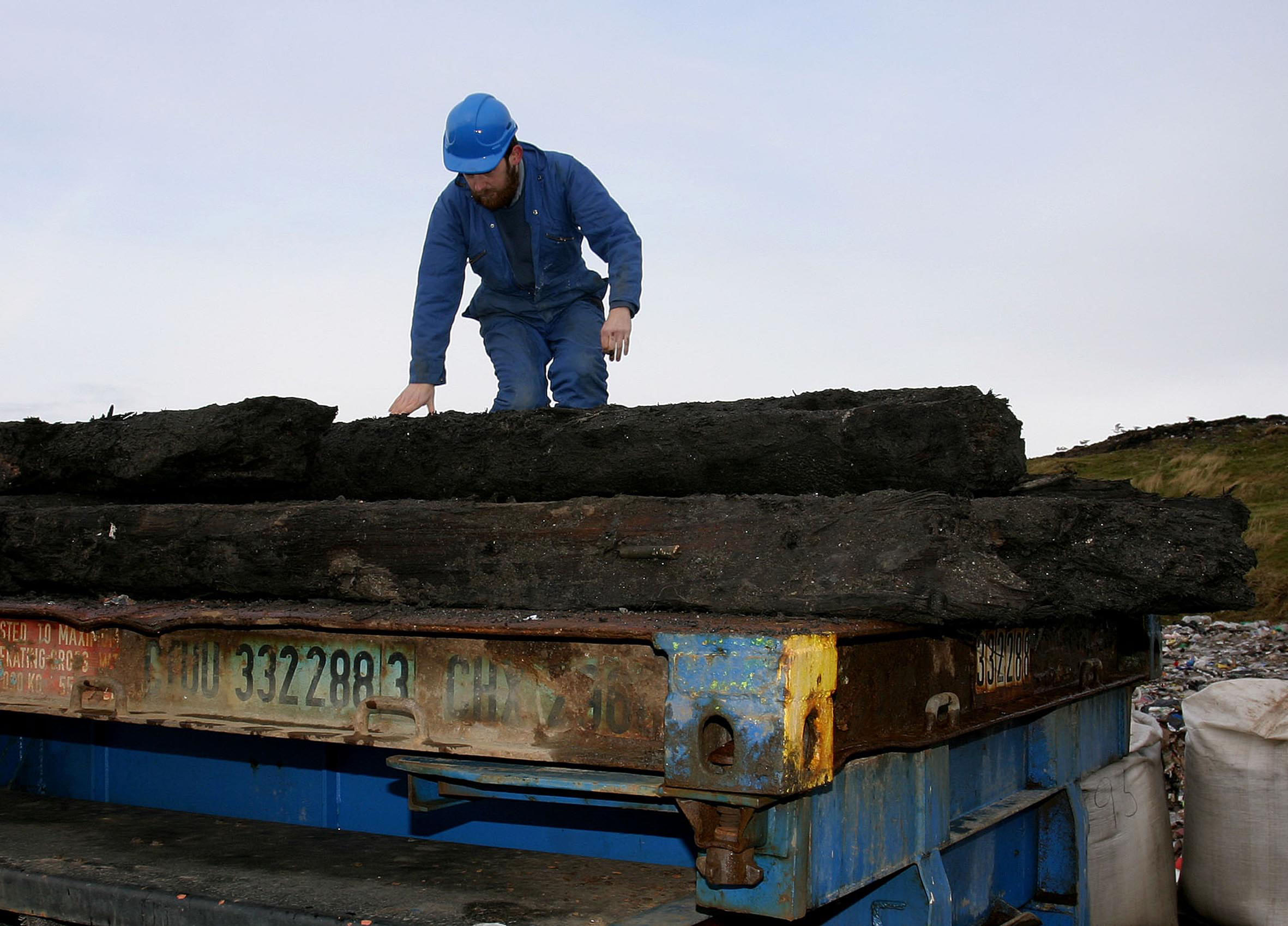
Photo: Jim Nicolson
At around the same time, Robert was contacted by Dirk Weissleder, from near Hanover in Germany, who not only had distant family connections to some of those on board the vessel but is also the vice-president of the World Federation of Genealogy and Heraldry.
“I was interested in the details of the voyage, and since much had already been done, I was motivated to research about the ship itself: where she was built, who owned her and how people knew about the chance to emigrate,” he adds to the story.
“It’s a treasure of history; and the voyage continues,” he says.
Being in Lerwick this week and even having had the chance to visit Bigga he describes as “incredible”.
“I am very grateful to have the chance to learn about all this.”
And there is one more chapter to come to bring it all to a conclusion.
During the Covid pandemic, when many people suddenly had a lot of time on their hand, Matt Kirby and some of his former colleagues at the fish factory started exchanging photos from that time in the 1970, including sharing some on the Shared Shetland Memories Facebook page.
That way he got the name of the vessel and, thanks to Google, he was able to find Robert Wuchatsch in Whittlesea, near Melbourne.
That was in 2023. Matt is happy to admit that this whole story “gets to you”, and since Robert wanted to come Shetland again to do more research, the idea was born for the three of them to do this together, and not just because they enjoy each other’s company but also to somehow conclude the project.
“We want to publish a book to mark 50 years of research,” Robert reveals.
“We feel we have done enough now, so we will put the story out there and, perhaps, more information will come our way.”
Keep Shetland’s news open to everyone
Your membership helps us report the stories that matter to Shetland — and keep them free for everyone to read.