
Viewpoint / ‘We had to find our own path’
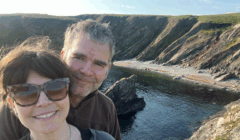
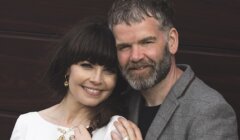
Following the launch of a fundraising campaign to help Bryan Peterson finance vital brain tumour care abroad, he and his wife Karlin reflect on how they have stayed positive in light of a life-threatening disease

When I reflect on my life so far, I’ve had a hell of a good laugh. I’d do the whole thing again without regret, even the parts that strayed into the realms of “misadventure”, as a policeman once told me. I’ve made many mistakes, but I hope I’ve learned from them.
I can only remember joy, hilarity and feeling contented. That is entirely down to the people I’ve been lucky enough to spend my time with – making childhood friends, playing in bands, having rewarding jobs, helping build Mareel, becoming a councillor, being close to my family, and getting married to the woman I have fancied since I was a teenager!
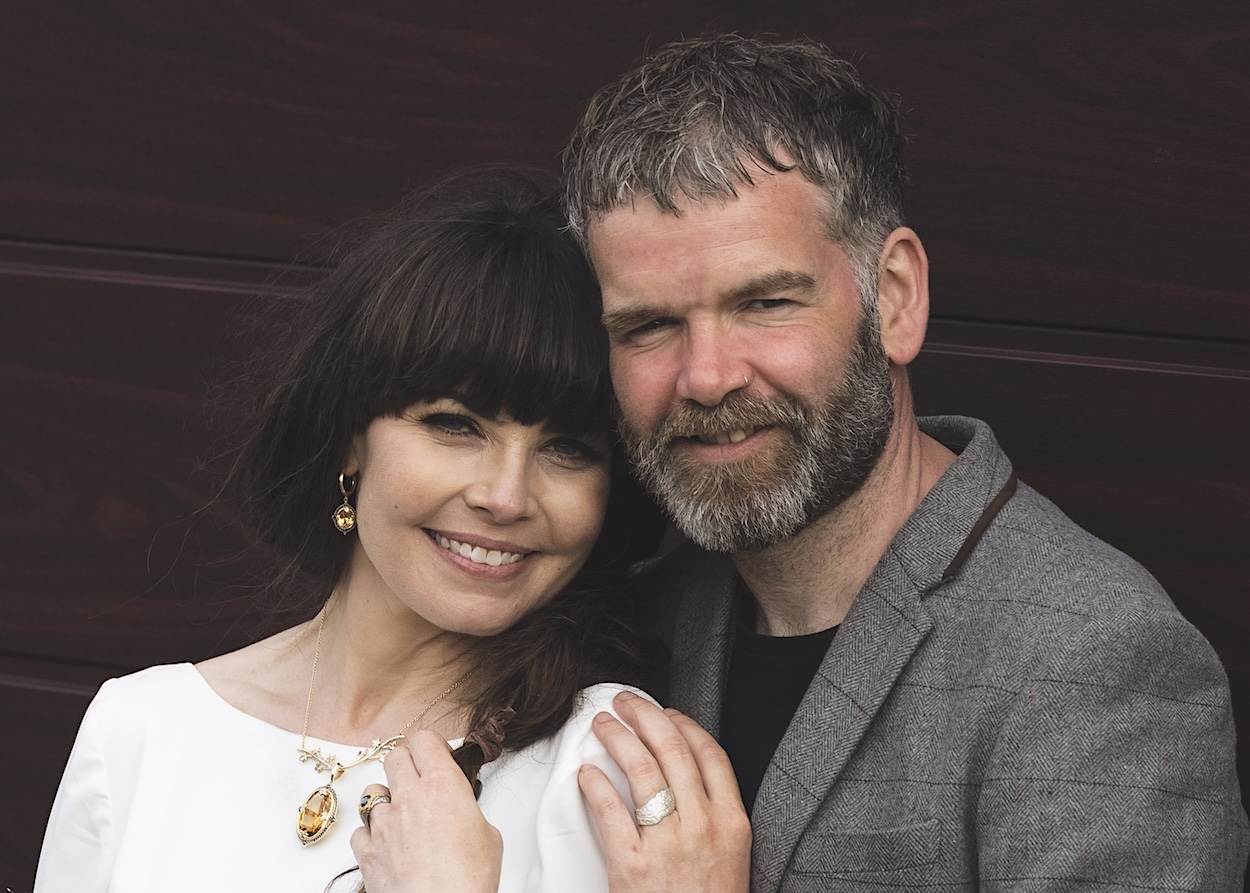
I waited 27 years to get a kiss from Karlin, and the wait was worth every second. I remember the first time I saw her – she was the Saturday girl where my mam worked at Smiths of Lerwick. We were both in our early teens. I’m from Holmsgarth and I was instantly smitten by this mysterious short-haired lass from the Tingwall valley – it was like Romeo and Juliet.












We got married in our mid-40s after being great friends for most of our lives, and I’ve never been happier.
Karlin is the person who keeps me alive and the person I want to stay alive for. Before this medical situation, I thought we already loved each other as much as was possible. But it turns out there was another 10 per cent sitting waiting, and it took this situation to allow us to access it.
The first symptom of my brain tumour was losing consciousness and collapsing at work in March 2025. I was ambulanced to hospital and doctors assumed I had had a heart attack or stroke.
My main symptom was a complete inability to talk, which lasted for several days and has never fully recovered. I now have to think before I speak, which is a life skill I should have developed by now anyway!
I had an MRI within days, and a “density” was noted in the left-hand side of my brain just behind my ear. Doctors were concerned it was a rapidly growing brain tumour, so they monitored it for a few weeks before confirming. Then I was sent to Aberdeen for immediate brain surgery.
Having the MRI scanner in Shetland may well have saved my life because my tumour was detected relatively quickly after my first symptoms.
I was lucky that the tumour was near my linguistic areas, which meant conscious brain surgery was available for me. The surgical team could keep me talking during surgery so they could decide what tissue was tumour and what tissue was useful brain.
Fascinating surgery
The surgery itself was fascinating – the most interesting experience of my life. I was lying on a bed with my head in a clamp while they cut a three-inch hole in my head. Then they put probes into my brain that allowed them to move my fingers and toes. That was surreal.
For the rest of the three-hour operation the neurologists kept me talking and showing me pictures of animals, fruits and household items for me to name. I’m proud to say I got full points on these tests (after swotting up on fruit in Lidl the night before).
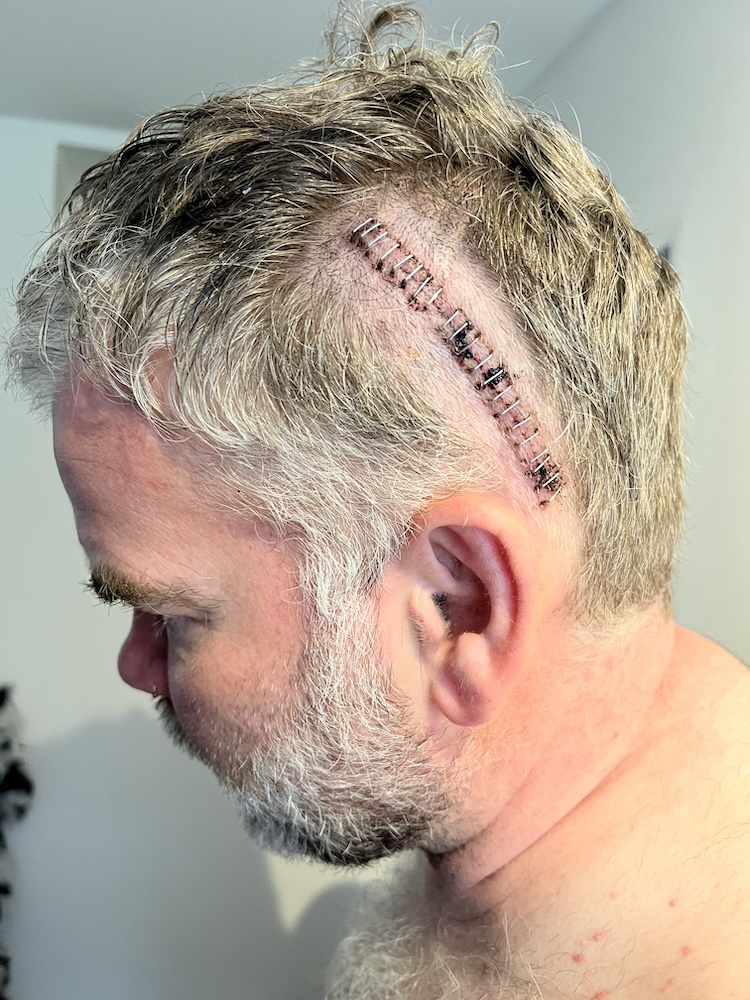
I was able to watch the operation on a screen, and the surgeon was chatting away with me about everyday small talk. The whole thing felt very friendly and relaxed.
The oddest experience was when they were putting my skull back together and I could hear the screws squeaking. After the operation I felt great – quite exhilarated – and the surgeon was confident that he’d removed most of the tumour.
After the surgery the situation became more challenging when the tumour tissue sample indicated I had a glioblastoma, which is a Stage 4 invasive and aggressive form of brain cancer with a life expectancy of months rather than years. Karlin and I received this information on our wedding anniversary, which added some poignant weight to the moment.
Being given a terminal diagnosis takes a while to take in. My first thoughts were that I’d have to tidy the shed and teach Karlin to use the storage heaters. There’s a lot of life admin to take care of when you think you have months to go!
It was a very sobering experience, but we agreed we would take the journey ahead as it comes, and approach it with logic, evidence and cool heads.
Next on the NHS plan was six weeks of combined chemotherapy and radiotherapy in Aberdeen, followed by six months of maintenance chemotherapy – a phase I am still in.
Up till then I had had nothing but praise for the NHS team. Each one I met was a hero.
There was no plan
However, we began to become a little disillusioned when our Aberdeen oncologist told us that the chemotherapy would be largely pointless because it was ineffective for my type of tumour, but prescribing it was just routine.
We asked what lifestyle changes we could make to improve the outcome. We were told that diet and exercise would make no difference. I was told I might as well drink beer (ironic, because I haven’t had a dram for a decade), eat pizza and watch TV because I might as well enjoy whatever life I had.
I asked what the plan would be if the tumour inevitably began to re-grow. There was no plan.
I asked what treatments I would get from the NHS once the six months of maintenance chemo had finished. I was answered with a shrug of the shoulders.
Then I asked if I was just expected to return to Shetland to die. I was answered with another shrug.
At that point Karlin and I decided that we had to find our own path.
We called and emailed every consultant and specialist we could track down and set about educating ourselves about what is happening around the world. Almost everything we have learned has been through reading academic journals, government legislation, medical journals and cold-calling professionals. This type of information is not easy to find, and patients receive little help in searching for it.
One of the most frustrating aspects is that, in the absence of recent and relevant developments, patients are scared, overwhelmed and in need of hope. That makes them vulnerable to misinformation and scams.
After having so many conversations with cancer patients and their carers who had headed down the information rabbit hole, we put together a document about new developments and contact details for consultants we have found knowledgeable. We have shared this with several people and we would be delighted to talk to anyone who feels we could help in any way.
We are now enrolled at IOZK Immun-Onkologisches Zentrum Köln in Cologne, Germany. They use immunotherapy techniques to train the immune system to identify and fight cancer cells, together with additional treatments such as hyperthermia, which uses controlled heat to the brain to make other treatments more effective.
I am also given a range of drugs that show statistical evidence of being positive in cancer care. It’s genuinely fascinating stuff, and my doctors have endless patience in the face of my relentless questions.
However, some of these drugs have to be obtained privately in Germany, in person, at considerable cost despite being available on prescription via the NHS – it’s just that the NHS haven’t done the trials yet that will link these drugs to brain tumours.
From a personal point of view, life has changed completely but stayed oddly the same. Travelling to Germany for treatment is becoming part of our new routine, and Karlin and I can carry on working in relative normality via video calls. I’m proud that I’ve never missed a council meeting!
Living in Shetland has shaped this experience in two very different ways. For example, having an MRI scanner here may well have saved my life, and the strength of the community means help of all kinds are everywhere.
But living in a rural island community also means distance from trials, specialist centres and emerging treatments, and those gaps become very real when having to ‘go private’. Karlin and I have considered moving abroad to access more effective and more cost-effective treatment, but our hearts are in Shetland.
Experimental treatment and trials are generally available to people living near hospitals with active research facilities, and there are very few in Scotland. Genome sequencing is commonplace for NHS England patients but not Scotland, so we had to work with a clinic in America at a cost of several thousand pounds.
‘I don’t feel sorry for myself’
My private consultant and German medical team agree on the ideal frequency of ongoing scans, but my NHS Scotland oncologist will only sanction half the number. That means we travel to London for additional scans and are paying NHS England through private means.
I don’t feel sorry for myself. We now expect medical and legislative hurdles, and we just have to find ways around them. But I do feel for other patients in similar positions who may give up hope in the face of these hurdles.
I read a lot of philosophy when I was younger, which has been a very useful toolbox in helping me accept the situation. Karlin has her Christian faith, which has given her great comfort. My personal objectives are to seek clarity of thought, be honest, and be good to other people. It’s pretty straightforward.
I don’t feel unlucky. A few cells in my brain have gone wonky and the result is a brain tumour. It has no conscience, intent or morality. The situation has no bad luck or ethical framework. It is simple biology. And that’s it.
My situation has opened up many deeply moving and heartfelt conversations with people. It is a blessing to be able to express love to people openly and without concern. If I have learned anything, it is to tell the people you love that you love them and try to be a good person.
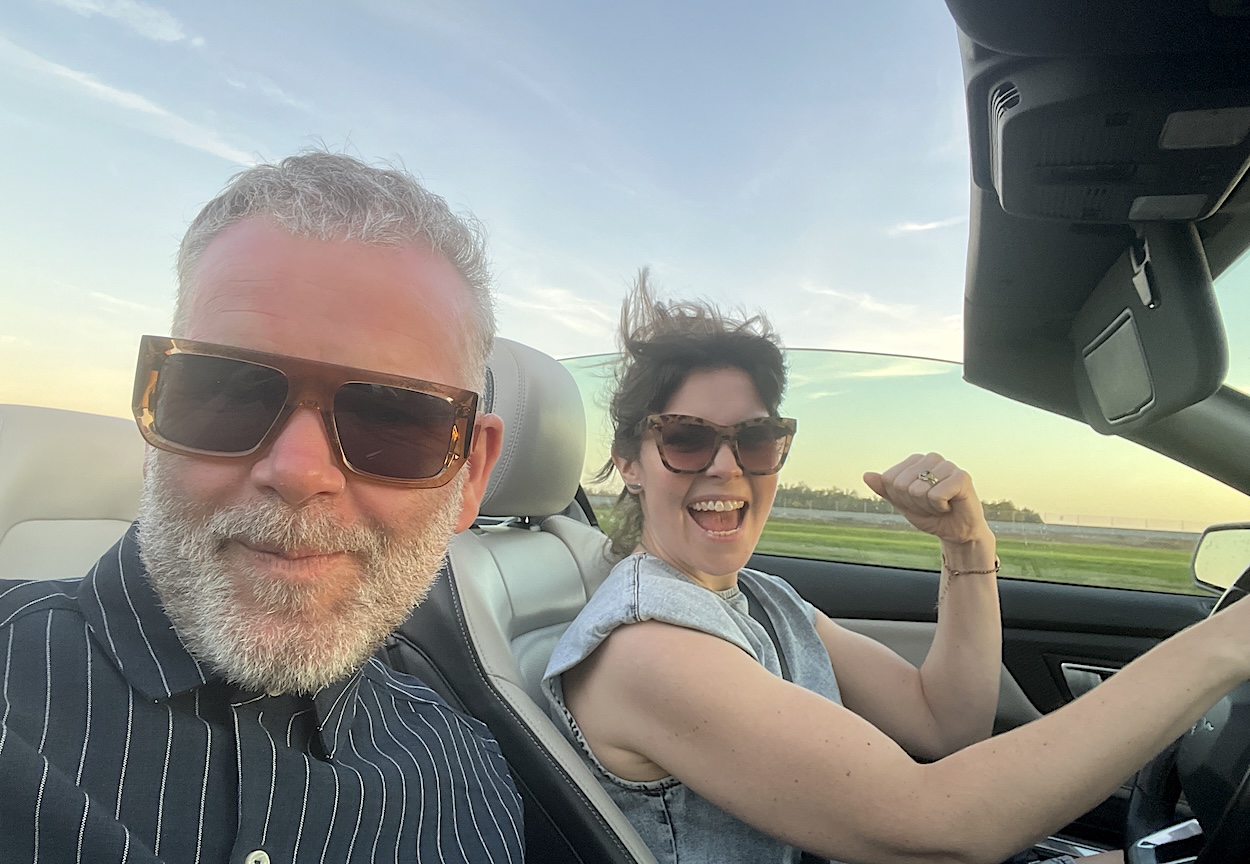
Karlin added: People have commented time and again on how positively we have approached this huge life curve ball. That is largely due to Bryan’s positive nature and the fact he is king of the reframe.
Bryan has never asked why this has happened to him. His thoughts are ‘why not me?’ rather than ‘why me?’
Because of his approach, the rest of us – his family and friends – are able to navigate this with more strength and confidence.
We both bring different things to the table – Bryan is all about academic research and logic, while I am all about getting things done, with emotion and faith as my guide. Together we balance each other and make a great team.
We can all be angry or hurt and express those feelings, but we should always return to hope.
Bryan approaches most things in life with balance, logic and humour – and this has not changed in the face of a terminal diagnosis.
More than anything, we’ve felt how important it is to say, show and do things which demonstrate our love for each other. Love wins in every situation.
Bryan continued: I believe strongly in the positive power of community. Since my first seizure a year ago, Karlin, me and our families have felt deeply comforted by the love and well wishes we have received.
I feel deep gratitude for everyone who has helped me, and love for all the people who have given Karlin and me well wishes, support and friendship. I am humbled by the support we have had from the community. I’m proud that in situations like this the Shetland community support each other.
So far, more than £100,000 has been raised to help fund the next six months of life-saving brain tumour treatment. Donations can be made via this GoFundMe page.
Our family are struggling to comprehend the support and hope the crowdfunder has given us. On the first day Karlin had to finish work early because she couldn’t make jewellery through her tears, and I had to go to sleep for a while because I was struggling to comprehend the situation.
We haven’t yet found the words to express our thanks – gratitude, humbleness, hope and relief are just not sufficient. A weight we hadn’t realised we were under has lifted. There have been a lot of happy tears in our house at the weekend.
We have been able to pay a £70,000 medical invoice that had been staring at me from my desk for a month. There shouldn’t be a price on life, but we are facing some very real decisions in that department.
The world is full of negativity and distraction, so take time to savour life’s simple pleasures. Since my diagnosis, I consider moments like having a cup of tea with my mam to be the most precious and valuable things in life.