
Viewpoint / Redesign politics. Not women.
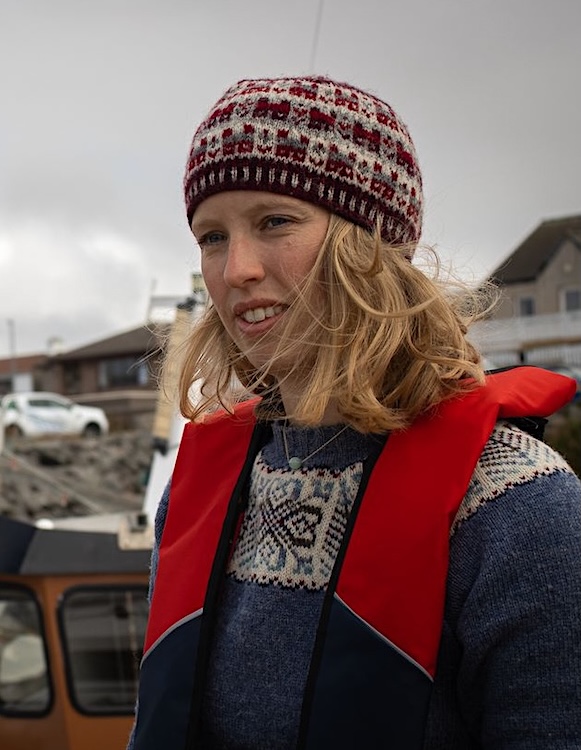
On International Women’s Day, SNP parliamentary candidate Hannah Mary Goodlad makes a passionate appeal to call out gender-based obstacles and argues for a new politics

SATURDAY mornings, as a little girl, we were about heading out to the Scalloway pier with my dad. Rain, snow, or wind, we would be there in our wellies and boilersuits.
But it was also precious time with my dad, rattling around in the back of his pickup truck, soaking up the lyrics of the all-time greats – Emmylou Harris, Patsy Cline, Joan Baez, and of course, Dolly Parton.
Country music still strikes a heavy chord in my heart, and as my horizons have expanded, so too has my repertoire. One of the latest bands I’ve discovered is the Highwomen – four American powerhouse singers in their own right who’ve combined forces with a modern take on 1985’s Highwaymen.
Their debut song back in 2019 was Redesigning Women.
It’s a song about women in 360 degrees. Acknowledging all our attributes and achievements whilst not shying away from our flaws. It celebrates everything about us that makes us powerful, unique, and wonderfully female.








Equality doesn’t come easy – we have to commit to it, take responsibility for it, and throw in that pinch of hard graft for good measure. We know that diversity makes a difference – in work, in politics, in life. But all that shouldn’t matter because we also know that it’s the right thing to do. And that should be enough.
Gender-based obstacles, be they small or large, are everywhere. And since putting my name on the ballot paper, I see that politics is full of those obstacles.
Politics amplifies all of this. Online, the volume turns up. Women in public life receive more abuse, more commentary about appearance, tone, age, family choices. Disagree with a policy and you’re emotional. Speak firmly and you’re aggressive. Display clarity, and you’re patronising. Show compassion and you’re weak.
The criticism so often shifts from what we say to who we are.
In person, it can be more subtle but no less real: being interrupted more often; being asked who you’re supporting rather than what you stand for; having your experience quietly questioned; sitting in rooms where you’re the only woman and feeling the weight of representing more than just yourself.
In many political offices, especially at Westminster, the obstacles can be structural. Political systems were built at a time when women were not present in them. The hours, the culture, the expectations, were not designed with shared caring responsibilities in mind. They assume someone else is holding everything together at home. Many women carry both roles and carry them quietly.
I don’t write any of this for sympathy. It’s a privilege to be able to put my name on the ballot paper and to have the opportunity to serve Shetland would be such an honour. I write this for honesty.
If we want better politics, we have to acknowledge the barriers that still exist within it.
What concerns me most is not just the headline abuse or the obvious structural barriers. It’s the cumulative effect: the steady drip of commentary, correction and contradiction; the quiet recalibrating that women are expected to do every day just to remain acceptable in the room.
Politics can magnify that pressure, but it doesn’t invent it. It reflects a wider culture that still struggles with confident, ambitious women who refuse to shrink themselves. And when you step forward into public life, you feel that tension more sharply. It becomes personal, not theoretical.
Throughout my life, I’ve faced challenges that have hurt. I’ve had things said that have stung a little more. And I choose to share this because we often don’t talk about it in detail – the stuff that hurts, the stuff that chips away and takes time to heal.
“You’re too intense, you’re not bold enough, not brave enough, speak up, but actually on reflection – you’re too loud. Know when to say yes, know when to say no. Lean in, step up, step down, make room, take room. You’re too quiet, tone it down, you’d be a great mother, focus on your career for now. Be more assertive, be less aggressive. You’re very tough, you didn’t take a strong stance here. You’re dangerous …”
We’ll all have our own lists.
Lists of advice served up that contradict and confuse.
Lists that are reserved for women. With all these diverse and apparently opposing incompatible traits, it’s a wonder women can function at all.
And, like many other women, I’ve been the receiver of inappropriate jokes, comments that cross the line, and looks that make you feel a little less, every time.
I also encourage us to ask ourselves this – how many times do we all stay in situations, or stay silent in cases where we’re clearly uncomfortable, so that we don’t make other people uncomfortable? We make excuses for behaviour when it’s inexcusable. That’s a conversation that has to be held and heard.
Women are not fair game.
I hope we can shine a light on these gender-based obstacles in politics. To acknowledge that it still happens, to lift up the conversation, and to start to tackle the problem.
So, for as much as I admire them, I disagree with the Highwomen.
Women don’t need redesigning.
Politics does.
So far five candidates have publicly confirmed to be standing in the Shetland constituency at the 7 May Scottish Parliament election. They are in alphabetical order: Alex Armitage (Greens), John Erskine (Labour), Hannah Mary Goodlad (SNP), Emma Macdonald (Lib Dems) and Brian Nugent (Alliance to Liberate Scotland).