Council to call for ban on gillnetting by larger boats

SHETLAND Islands Council is to write to the Scottish Government to request a ban on the use of gillnetting by boats over 15 metres in the country’s waters.
It comes after a report on the controversial issue was brought to a meeting of the council’s development committee on Tuesday.
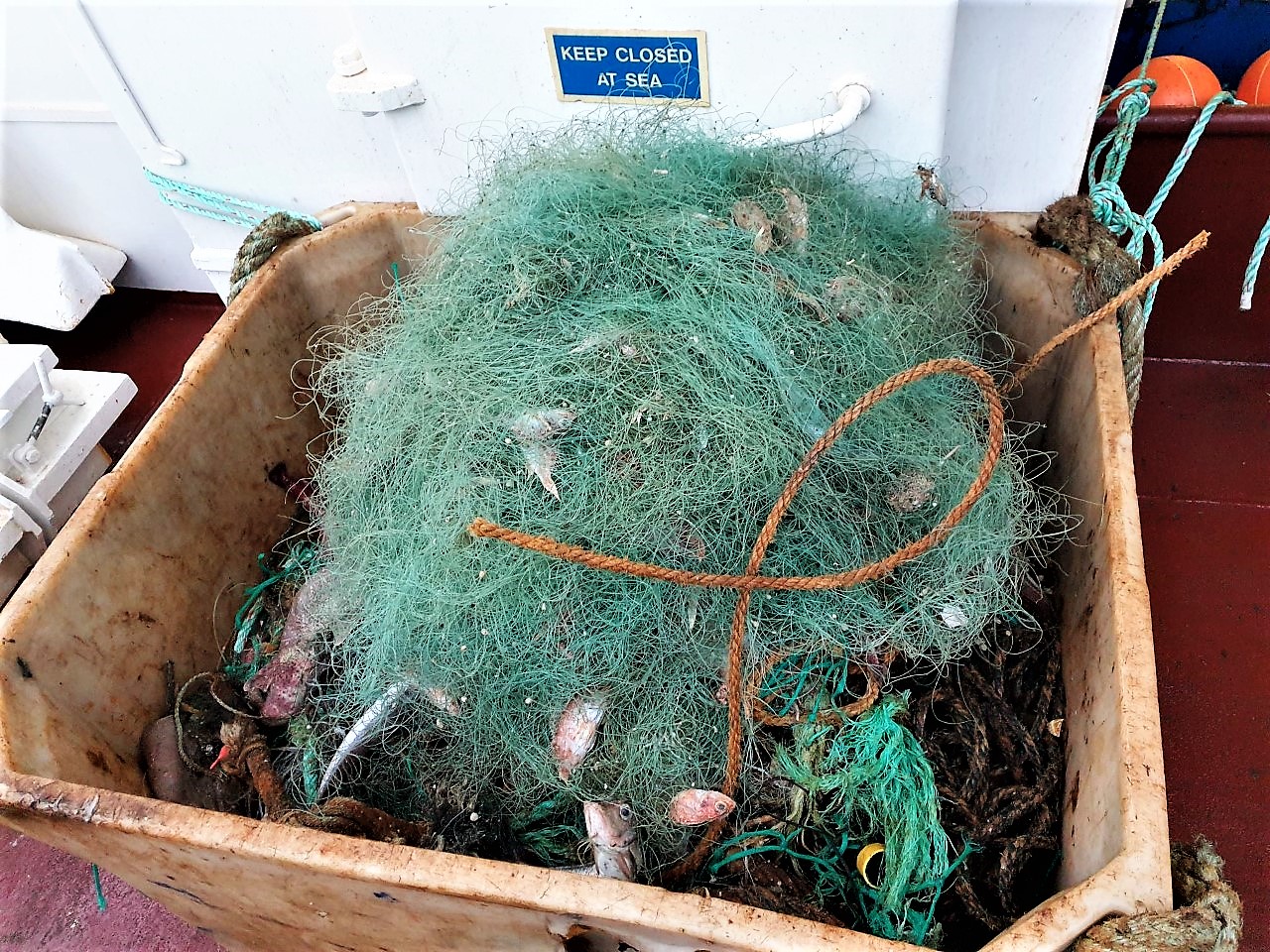
Industrial gillnetting – a practice generally undertaken by foreign fishing vessels – uses huge monofilament plastic nets that cover vast areas of sea and are designed to catch everything in their vicinity, often resulting in the entanglement of sea mammals and birds.
The nets are generally discarded in the water after use, posing a continued threat both to wildlife and to shipping traffic. The nets are regularly dragged up by local fishing vessels.
There are also concerns that gill netters squeeze out local boats from their traditional grounds.
A protest organised by the Fishing Forward UK group was held in Lerwick last month, and further action is planned in October.
Protest against ‘destructive’ gillnetting held at Market Cross
Meanwhile the the Scottish Government recently ran a public consultation on its future catching policy, which the local fishermen’s association responded to.
The netting issue was brought to the council earlier this year in a motion by local Green councillor Alex Armitage, who has called gillnets “curtains of death”.
His intervention resulted in the report being brought to the development committee.
A motion was also previously approved by councillors in 2020 on the problem of marine pollution from discarded fishing gear.
The new report from development director Neil Grant said there has been “limited progress” on the issue with government over the years.
It added that old nets should be taken ashore for disposal, and that lost nets should be reported.
“However this is clearly not working,” the report wrote. “The vessels involved in intensive gillnetting often bypass the modern and well regulated local fish markets and land directly into refrigerated trailers, making it very difficult to control how old gear and litter is taken ashore and new gear supplied.
Help keep Shetland’s news open to everyone

Good local journalism takes time, care and people on the ground. Membership helps us keep reporting the stories that matter to Shetland — and keep them free for everyone to read. Members get a weekly newsletter created especially for them, local ads only, and can bookmark stories and join the conversation in the comments.
“The sheer proliferation of discarded gillnetting is becoming a bigger issue and local fishing crews often trawl up lost or dumped entanglements of gillnetting.
“Old gillnets are often washed up on the Shetland shoreline. The practice of gillnetting is rarely used by Shetland vessels and only by some inshore vessels under 15 metres, for specific fisheries.”
North Isles councillor Ryan Thomson questioned by the proposed ban is for gillnetting by boats over 15 metres long, with Grant responding that smaller vessels tend to have less of an impact.
Responding to the council decision, Armitage said after the meeting: “I’m very glad that the SIC is now unequivocally in support of a ban on industrial gillnetting by boats over 15m.
“A productive fishery in Shetland depends on a thriving marine environment: gillnetting is damaging in both respects.
“I will continue to work with local fishers and with the Scottish Greens to bring this issue of gillnetting to the attention of decision makers at Holyrood.”
Keep Shetland’s news open to everyone
Your membership helps us report the stories that matter to Shetland — and keep them free for everyone to read.