Council making case to replace NorthLink vessels

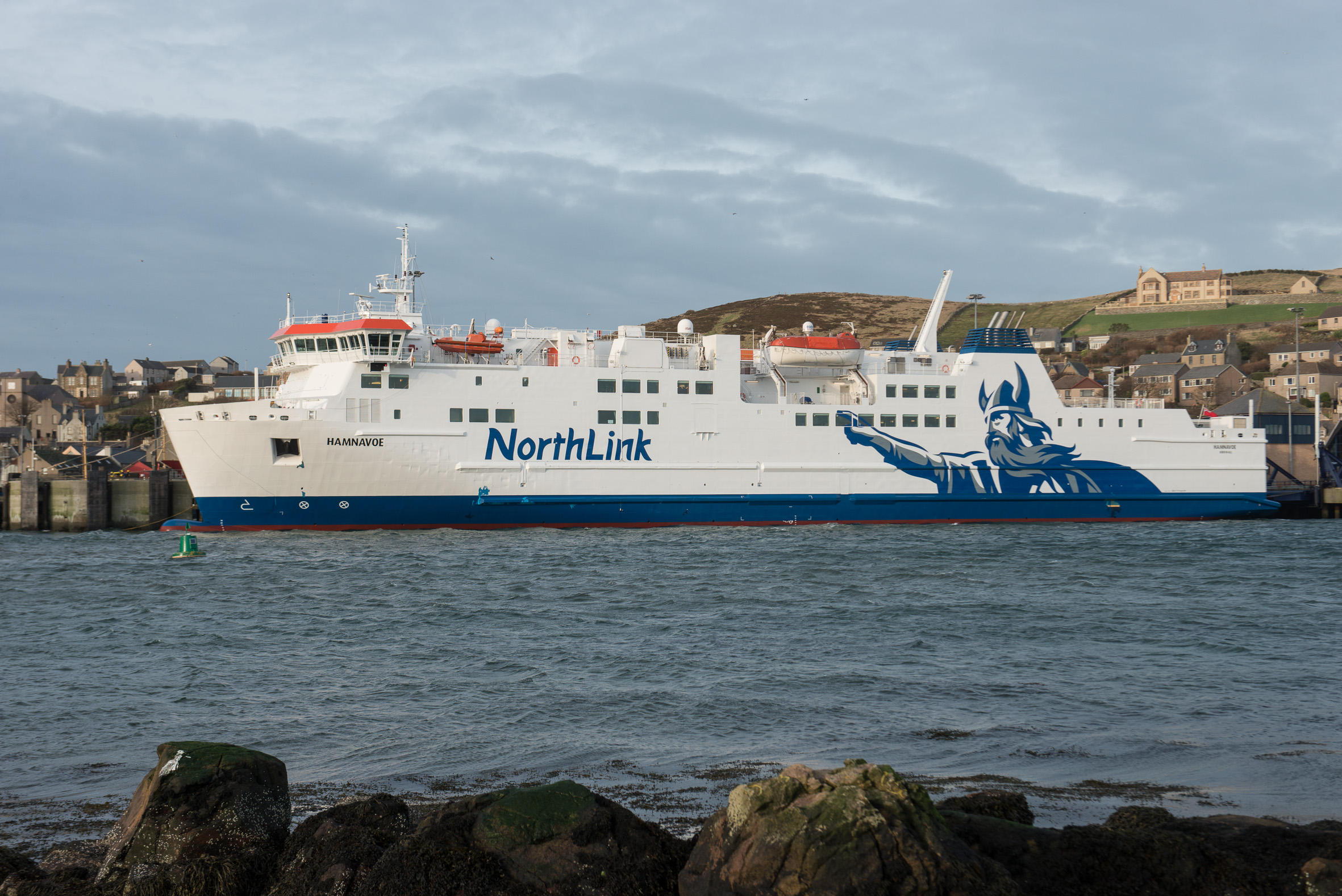
IT WOULD be “very difficult” for the government to get new vessels in place by the time the next north boats contract starts in April 2018, according to Shetland’s most senior transport official.
Shetland Islands Council transport manager Michael Craigie told councillors on Wednesday that the size of the ships remained “one of the most significant constraints” faced on the route between Lerwick and Aberdeen.
The council is determined to ensure its voice is heard in advance of the Scottish Government awarding the next contract after major discontent about the process which resulted in Serco winning the route in 2012.
Local politicians and officials are convinced that replacing the current fleet of vessels would allow the Scottish Government to harvest major financial savings.
Based on talks to date, Craigie said the direction of travel “feels more like a refinement of the status quo” than a radical overhaul of the service.


























But he sees “significant opportunities” to explore how the operation could be altered, and there is no reason why a different length of contract – with the possibility of switching to new ships during that term – cannot be considered.
The vessels’ capacity “continues to cause difficulty getting people and freight on and off the isles”, while the cost of the service is “significantly higher” than that serving other islands – even when the longer distance is factored in.
Aberdeen Harbour is proposing to increase its harbour dues by 100 per cent in the next five years to finance the project to turn Nigg Bay into a major industrial harbour.
Craigie said his understanding was that the Scottish Government would meet any additional berthing costs for the Serco NorthLink-operated boats.
Councillor Jonathan Wills said he hoped Transport Scotland would get the message that the high cost of the North Boats service was in large part down to “running four boats instead of three, with dirty, expensive engines”.
Help keep Shetland’s news open to everyone

Good local journalism takes time, care and people on the ground. Membership helps us keep reporting the stories that matter to Shetland — and keep them free for everyone to read. Members get a weekly newsletter created especially for them, local ads only, and can bookmark stories and join the conversation in the comments.
“With a properly designed fleet of purpose-built vessels – and you might be able to convert older ones – that would actually be a cheaper way to run the service and therefore cost the government less, because they are putting a fair bit of money into this,” Wills said.
Craigie agreed that officials felt there was a “cheaper solution available to the government – so there’s a win-win potential here”.
Another constraint on using Aberdeen Harbour is the narrow passage the passenger and freight boats have to navigate.
Responding to a question from Wills, Craigie said it was possible that the more accessible Matthews Quay could provide an “interim solution” without the need for new infrastructure in Aberdeen.
There is a “broad assumption” that Aberdeen will continue to be the Scottish mainland port of call, though Craigie said other alternatives would be explored: “Last time there was insufficient time and resources to look at that in any sort of detail,” he explained.
Meanwhile SIC officials are continuing to make the case that Holyrood should bear more of the burden for replacing its inter-island ferries and terminals.
A report to Wednesday’s Full Council set out that a mammoth investment of some £135 million is required to replace vessels and terminals over the next 30 years: “This is clearly unaffordable for the council.”
The local authority also spends £5.9 million a year on running the ferries, complemented by £6.4 million from the Scottish Government and £1.9 million in fares.
Craigie told members: “Until recently Transport Scotland has distanced itself from the matter of how these costs have been supported.
“But there has been a move from that position, driven by the success of the Our Islands Our Future agenda, which has really opened the door for discussion with Transport Scotland and the government about a different approach achieving a fair and more balanced approach to how these services are supported and funded.”
Councillors including Robert Henderson were sceptical as to whether replacing the infrastructure could even be achieved for £135 million. He again pointed to fixed links – bridges or tunnels – connecting islands like Yell, Unst and Whalsay to the mainland as the most logical solution.
Keep Shetland’s news open to everyone
Your membership helps us report the stories that matter to Shetland — and keep them free for everyone to read.