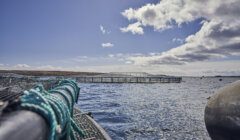

Big numbers underpin massive Billy Baa project during site visit
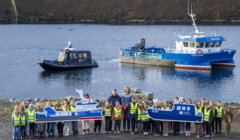
£7.5m salmon farm was opened on Monday by Hannah Mary Goodlad

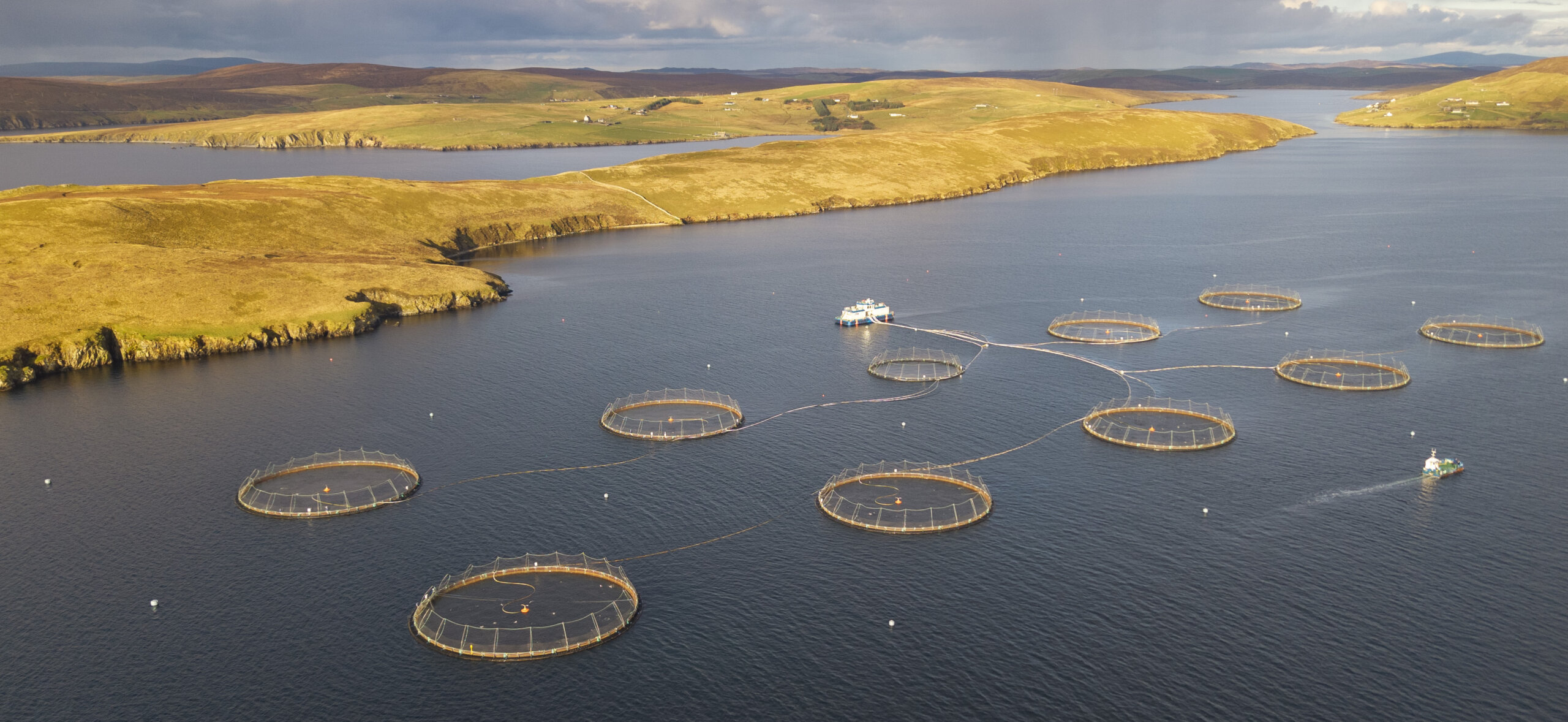
A VISIT to Scottish Sea Farm’s huge new Billy Baa salmon farm in South Whiteness is a tale (tail?) of large numbers.
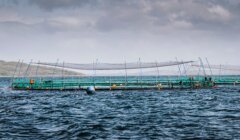
A total of around 900,000 fish on site, spread across nine 160-metre fish pens – the first of their kind in Shetland – and one which is 120 metres.
Enough water to fill 13 Olympic size swimming pools in each of those bigger pens, which stretch down to an average depth of 45 metres.
And 18 tonnes of feed required every single day to keep those salmon swimming – coming at a cost of £1,700 per tonne.
The smallest number about the project is one – which is where the £7.5 million Billy Baa project ranks in terms of size in Scotland.
Shetland News was among those to attend its opening ceremony on Monday afternoon, which included not just a tour of its South Whiteness shore base but also its 500-tonne capacity steel barge – Scottish Sea Farms’ biggest to date.





















Both on shore and out at the barge, ultra HD cameras can be spun and zipped around the 10 pens and zoomed in on to check the welfare of the salmon.
At the bottom of the screen key indicators tell attentive staff what the temperature of the water is, how much food has been filtered into the pen and exactly where in the pen the camera is.
Given that £7.5 million investment, it’s no wonder Scottish Sea Farms is leaving nothing to chance.
The company’s west Shetland area manager Robbie Coutts explained that they can feed the whole site in two hours, with new motorised feed spreaders in the centre of each pen helping to better distribute pellets.
Help keep Shetland’s news open to everyone

Good local journalism takes time, care and people on the ground. Membership helps us keep reporting the stories that matter to Shetland — and keep them free for everyone to read. Members get a weekly newsletter created especially for them, local ads only, and can bookmark stories and join the conversation in the comments.
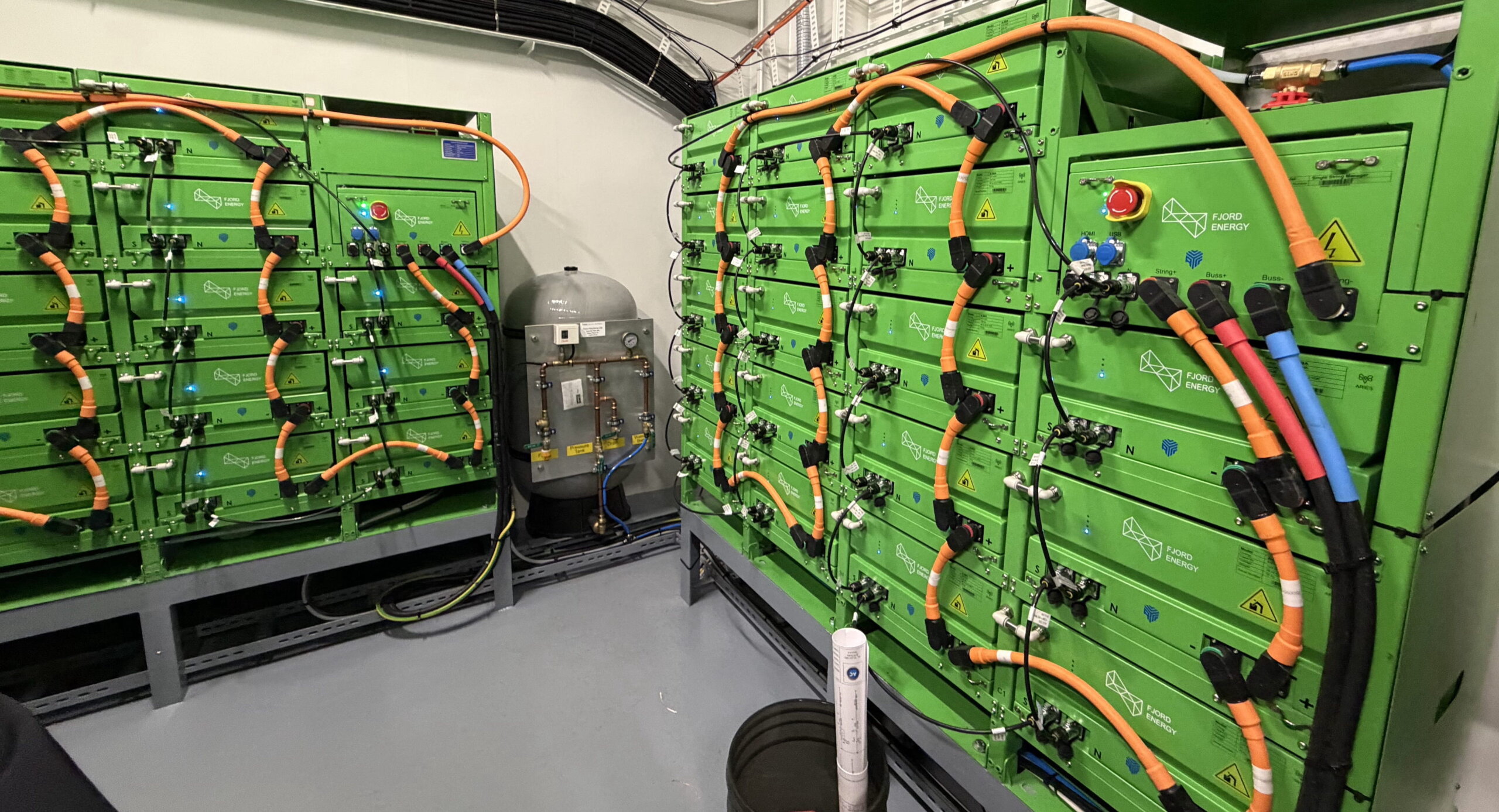
The barge at the Billy Baa site is not just the biggest in Scottish Sea Farm’s ever-growing portfolio, but is said to be its most technologically advanced too.
At the heart of that is a Fjord hybrid battery power system, which Coutts was keen to highlight. The site’s diesel generator will charge up the batteries while it is running, which will then take over when charged.
Coutts explained that their reliance on the diesel generator has dropped from eight hours a day down to just three.
“It’s a huge fuel saving,” he says. “It will even tell us how much fuel we’re saving a day.”
Scottish Sea Farms has repeatedly spoken in the build-up to Billy Baa of a strategy to build bigger farms in “better locations and with deeper waters”.
That has resulted in the nine 160m pens, which drop as deep as 45m on average. Coutts said this was giving the fish “much more room to grow” and “more water flow”.
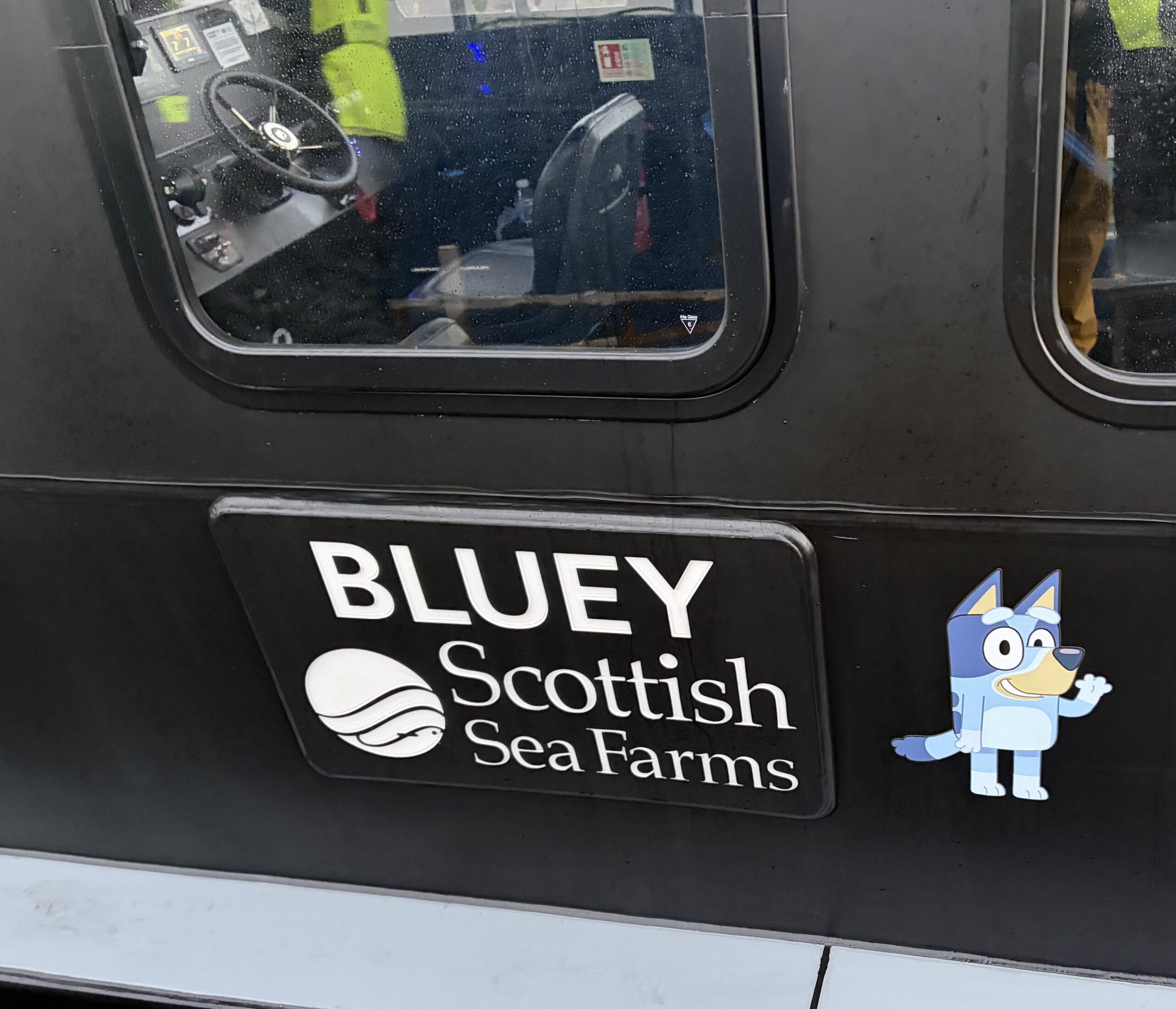
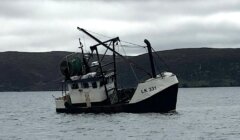
Bigger pens, a bigger barge, a new shore base and…two new workboats as well. The farm features a £1.8 million 16m vessel called Vissa-Dair, built by Macduff Shipyards, and a 9m sister ship named Bluey.
Infuriatingly of the two Vissa-Dair is the blue vessel, while Bluey is inexplicably pained black. However, it does feature a cartoon likewise of its children TV’s namesake.
Another big number associated with Billy Baa – or the salmon farming industry in general – is 300.
That is the number of audits that Shetland regional manager Richard Darbyshire said the company could expect, in response to questions about the industry’s environmental impact.
An industry with critics, questions have been asked in recent years about fish mortality rates and the impact of sea lice on salmon farming – but Darbyshire was adamant they could stand up to the queries.
He said salmon was the “most regulated sector” in terms of the production of protein across the country, and said they expect inspections at a rate of “almost one a day” every year.
“A lot of them are unannounced,” he said. “But we have no problem with scrutiny.”
Another major figure cited at Billy Baa on Monday was the £27 million that Scottish Sea Farms said it spent last year with Shetland suppliers, supporting 124 local contractors and businesses.
Shetland’s MSP Hannah Mary Goodlad – who opened the salmon farm with a snip of the scissors – said the company was a “really good employer for Shetland”.
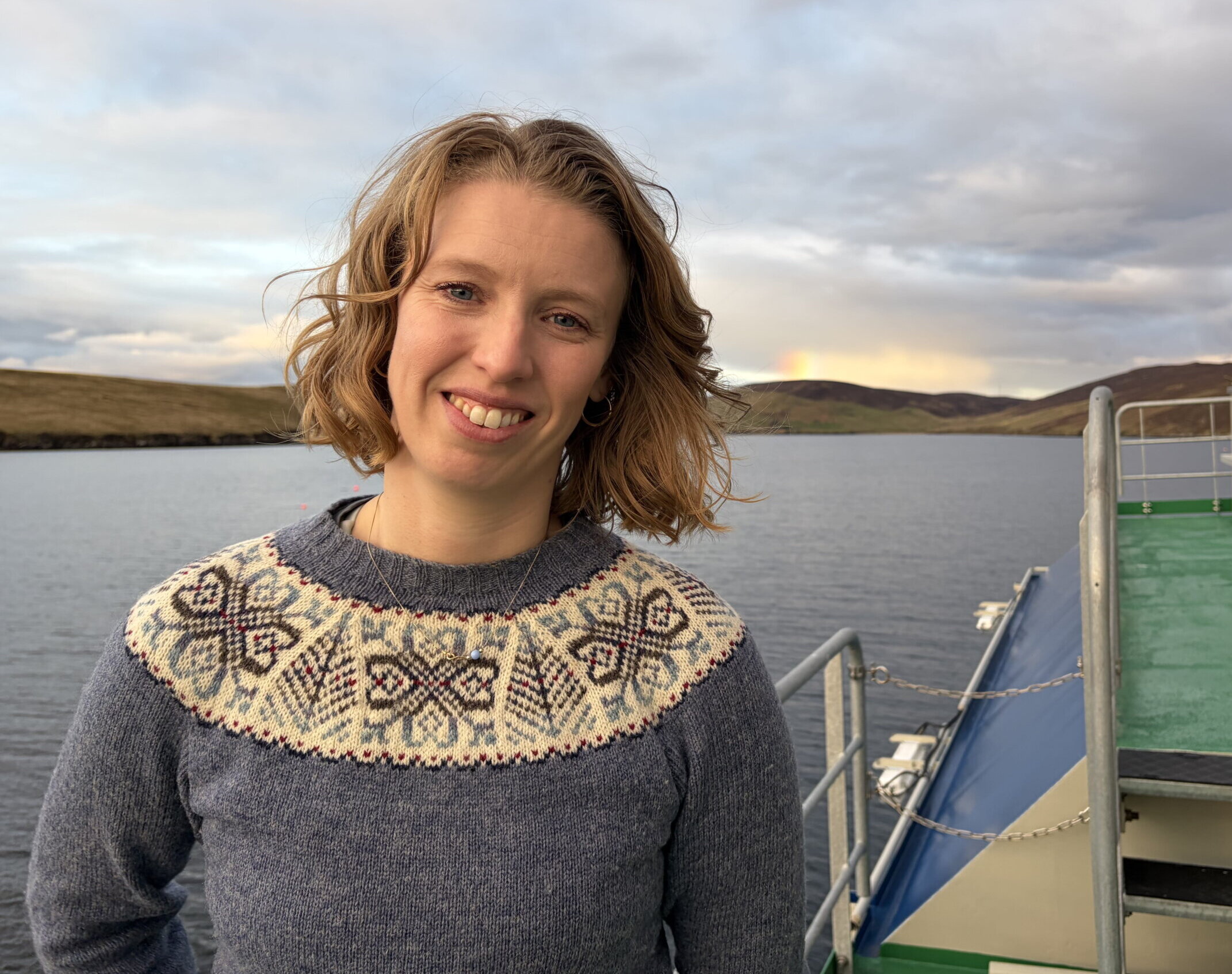
“I’m really looking forward to seeing more of the money being spent locally here,” she said.
For Goodlad – who grew up with her family owning a salmon farm, and with one of its work boats named after her – she described Billy Baa as a “massively impressive” project.
“I feel proud, this is a really important milestone for Shetland and Scotland,” she said.
“We have a long story with salmon farming, and it’s no surprise to me that Scottish Sea Farms have chosen Shetland.”
Billy Baa will not be the country’s biggest for too long, however, with Scottish Sea Farms set to launch the larger Fish Holm – also in Shetland – next year.
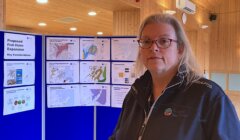
Billy Baa has a maximum allowable biomass of 4,000 tonnes, but Fish Holm – which will be located in Yell Sound and attracted concern from fishermen over displacement – will have up to 6,000 tonnes.
But for now, it is Billy Baa’s moment in the spotlight.
Keep Shetland’s news open to everyone
Your membership helps us report the stories that matter to Shetland — and keep them free for everyone to read.